A History of Games Through Mass Extinctions

My name is Paolo Pedercini I make games as Molleindustria which is a project about the relationship between games and ideology.
For a living I teach games and new media at Carnegie Mellon University, in Pittsburgh, PA.
I also run a pop-up arcade/gallery called LIKELIKE where we do exhibitions of experimental games and playable arts.
Most notably I’m NOT a game historian, nor a historian. And not really a game studies person either.
Here are the closest things I did to games history: I gave some talks about the death of Adobe Flash.
Ported to web a couple of early interactive movies, Kinoautomat from 1967, and I’m Your Man from 1992.
I made an interactive reconstruction of Alexander Rodchenko's Workers' Club, an installation originally exhibited at the 1925 World Expo in Paris. I made a video essay about one of the first art video games, Lifespan and the Dolphin’s Rune from 1983 and 1985.
But no, NOT a historian.
So I apologize in advance for the lack of rigor and footnotes.
I’ll try to stay in my lane and look at this subject through the perspective of a game maker.
I’ll take my non-historian, non-scholar, status as a license to move More nimbly More recklessly Across time And timelines And frameworks
Hopefully it’s going to be a generative exercise.
I want to talk about games through crises and mass extinctions.
Extinctions of games, of game studios, of game genres, and ultimately of cultural possibilities.
*I borrow this term “mass extinction” with plenty of shame, because we are in the middle of a mass extinction of actual species on this planet. And that is an infinitely more serious subject. Infinitely more worth of our attention and energy.
Besides, I argue that some of these gaming extinctions are actually good and necessary.
The game industry has been made and remade by crises.
I’m going to revisit some turning points in the canonical and Western-centric history of video games.
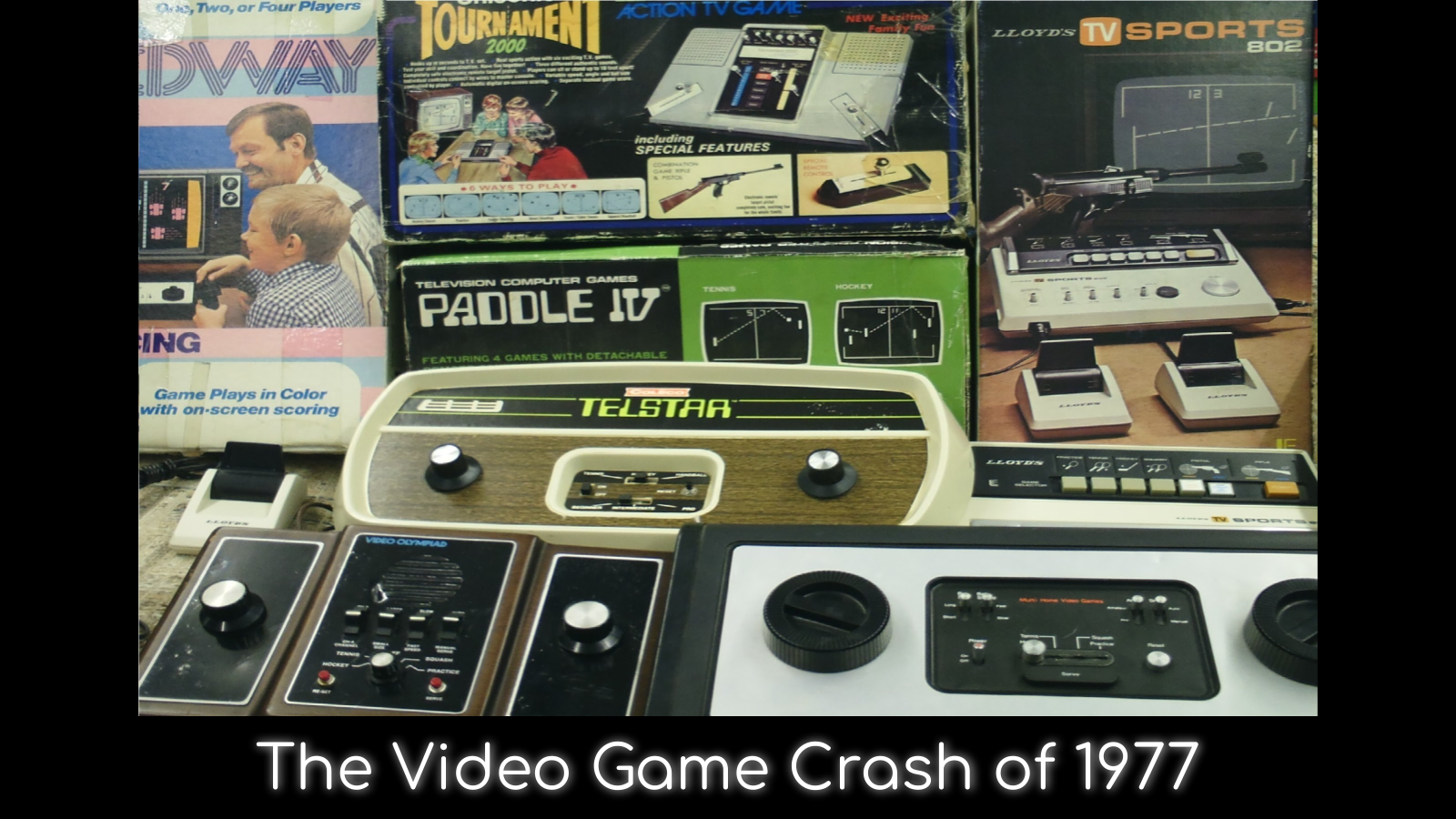
Let’s start with the first canonical one. The video game crash of 1977. Maybe it’s less of a crash and more of a downturn.
Video games try to move from the arcade to the domestic environment.
Like parasites they attach themselves to the television set and challenge its dominance of the living room.
It’s a craze but there is already a problem.
These early consoles can only run Pong and variants of Pong. And they are easy to clone.
Atari’s Pong, is itself a clone of a ping-Pong game for the Magnavox Odyssey.

Back then you could basically buy an inexpensive chip like this one. That contained 6 Pong variants.
Any electronics manufacturer could repackage it into their own version of Pong.

The market gets rapidly flooded by Pong clones. Hundreds of models, getting cheaper and cheaper.
It’s a crisis of overproduction of hardware.
Of course there is not enough demand for the SAME game. And most of them fail. It’s the end of the first generation of consoles.
To me this early mini crisis foreshadows some contemporary patterns:
- The rampant cloning of game ideas (it’s hard to patent game mechanics),
- The access to engines and middleware that fuels overproduction,
- The business-to-business side, the chip makers in this case, accelerating, and profiting from, a bubble.
As they say, during a gold rush those who sell shovels are the ones making the most money.
It’s capitalism as usual. Wasteful, cynical, dumb.
But as a game maker, as an artist, what we learned from this crisis is that:
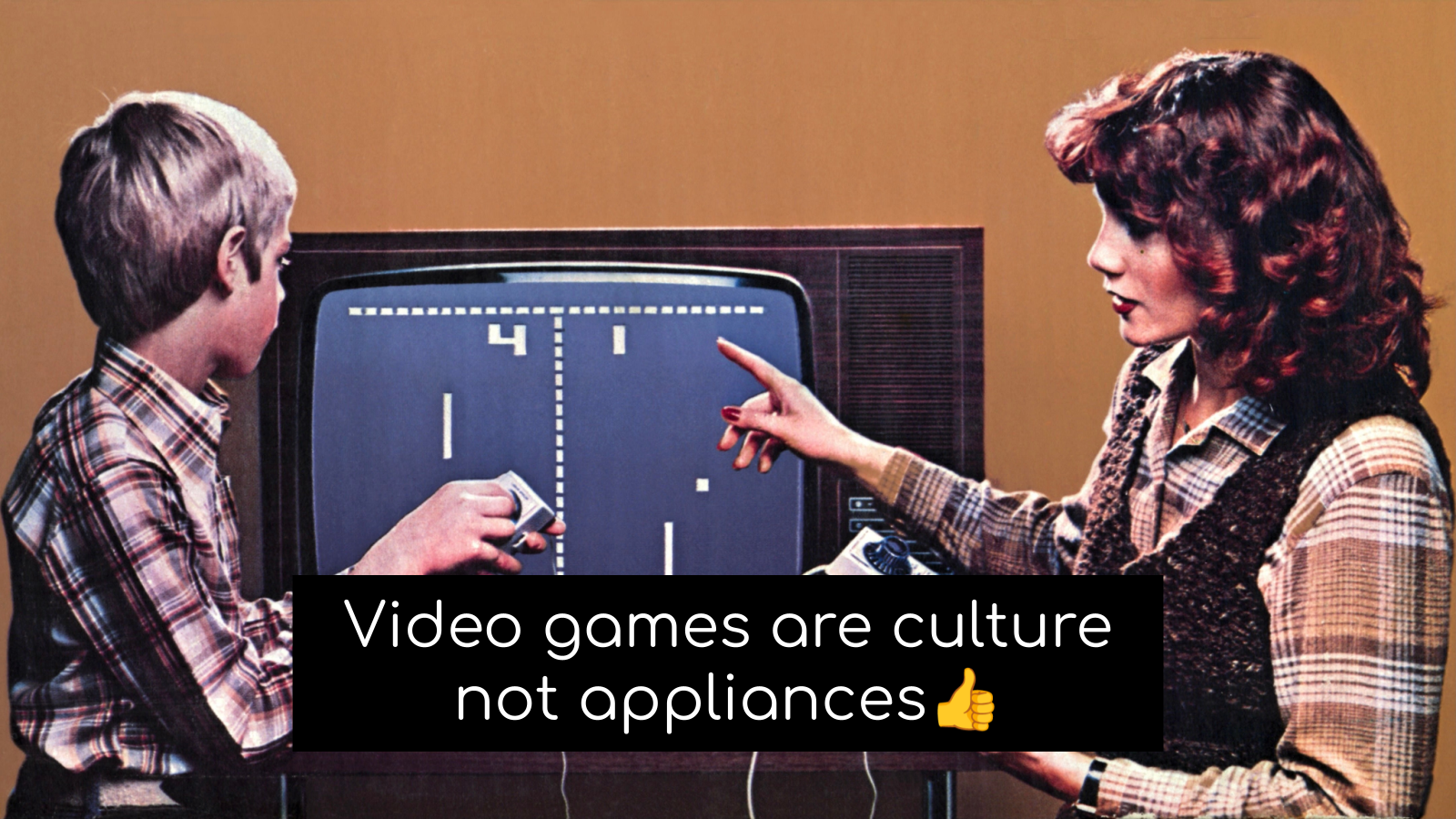
Video games are culture and not appliances.
Consoles and arcade cabinets are just things that run cultural objects. That are subject to trends, discourse, aesthetic judgements.
You cannot build a movie theater and show the Lumière Brothers films forever. The novelty fades quickly.
So all the following consoles have removable cartridges.
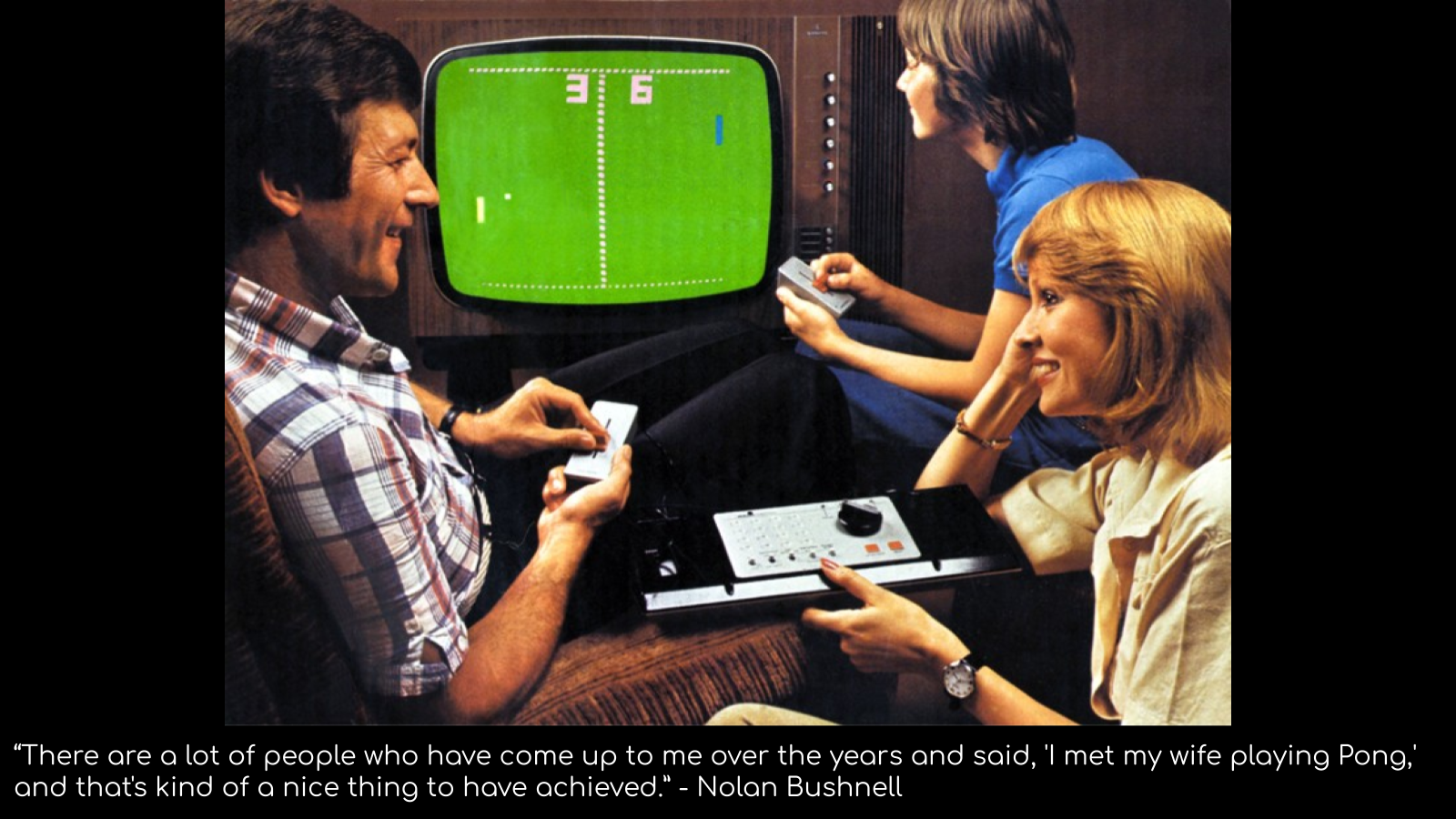
I’d say we also lost the social, multiplayer-only quality of Pong.
Nolan Bushnell talked about arcade Pong as social lubricant in bars.
When you approach Pong, at the arcade or at home, you knew that it was going to be a social experience.
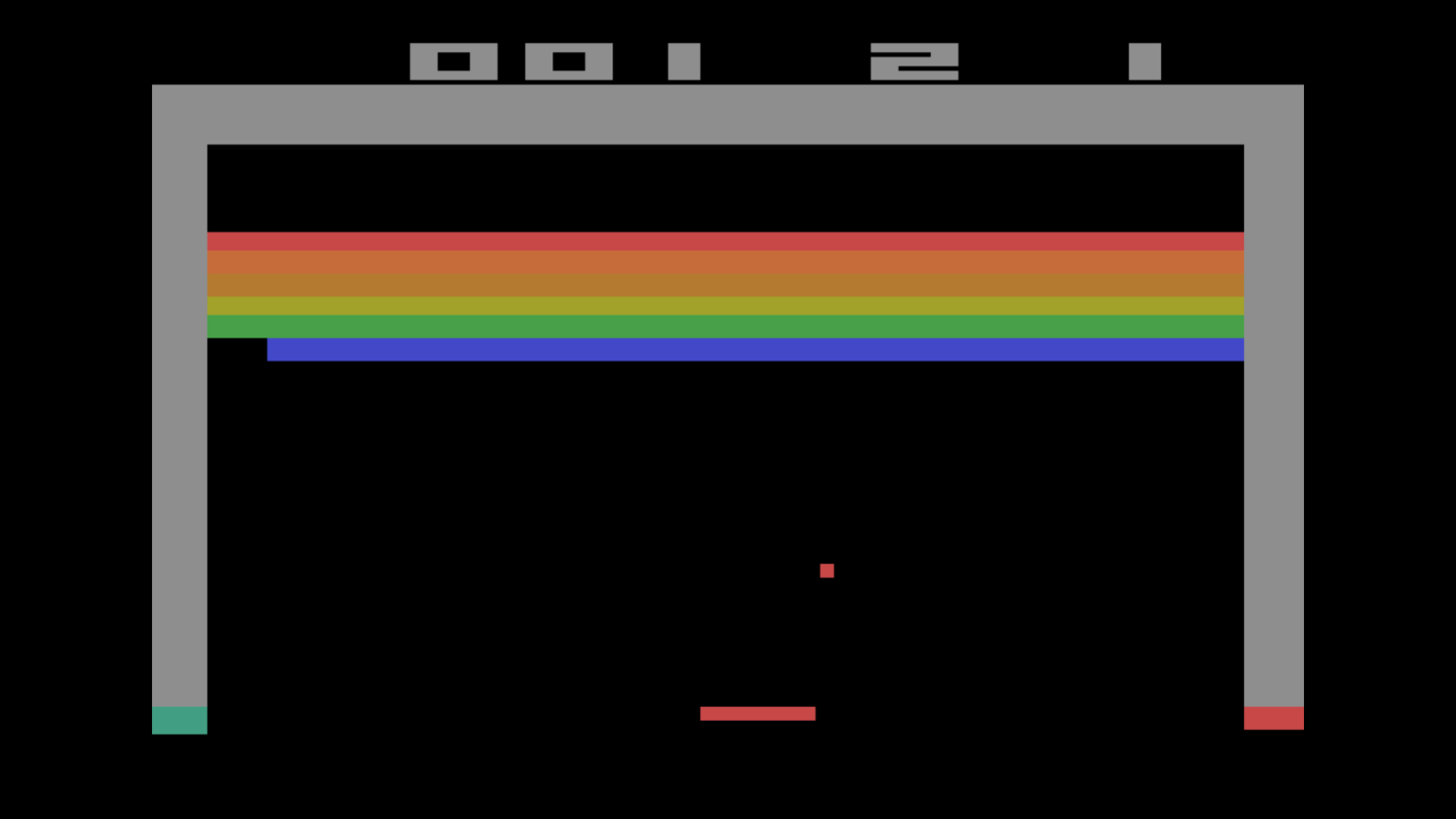
But at the same time Nolan Bushnell commissioned Breakout as a single-player version of Pong. (famously Steve Jobs and Steve Wozniak's first gig).
Bushnell knew that people don’t have friends or family members around all the time.
For the following two decades or so video games become primarily single-player experiences.
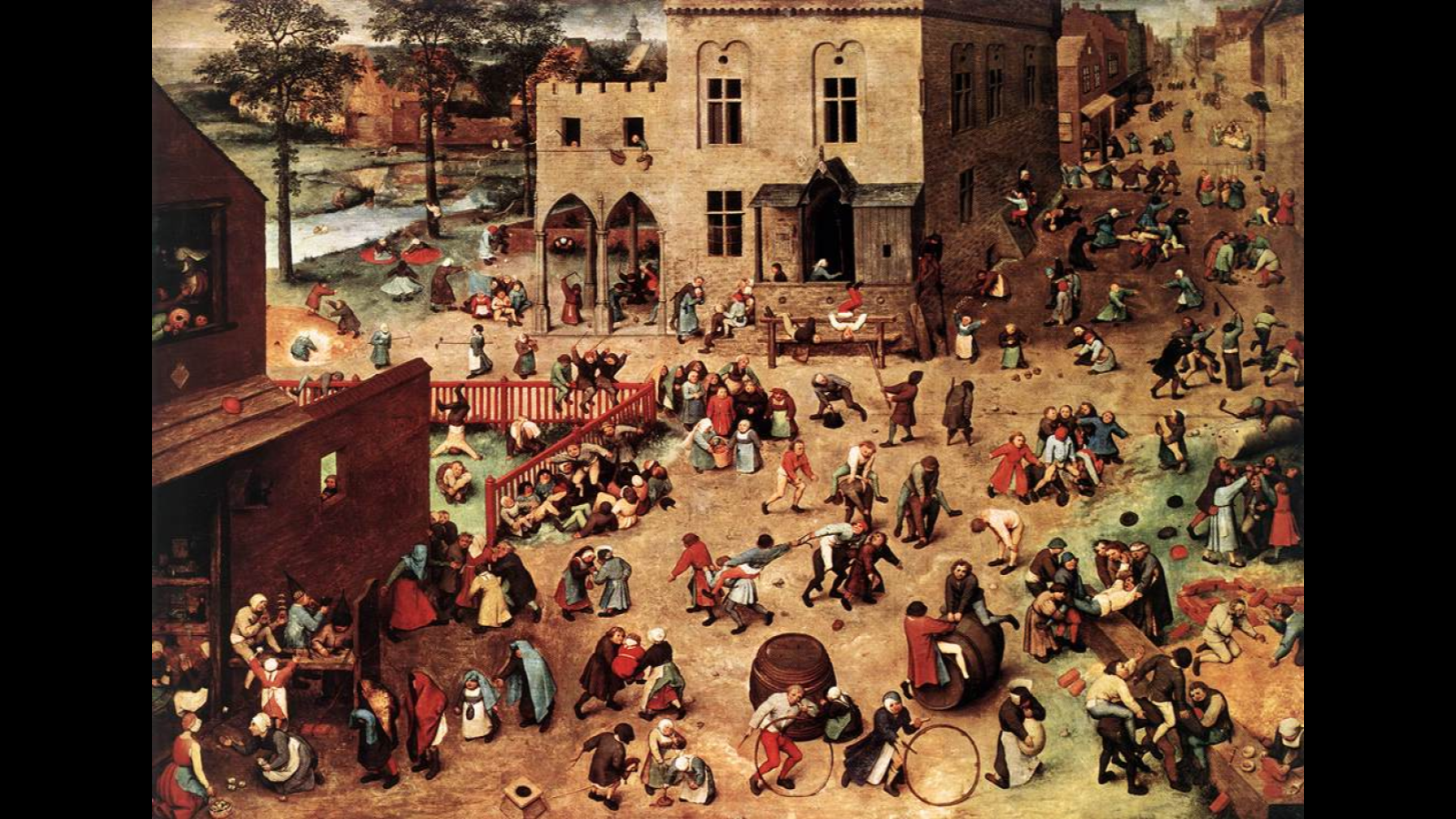
Which is a kind of weird parenthesis in the history of games in general.
Outside of the digital realm, solitary games are an anomaly.
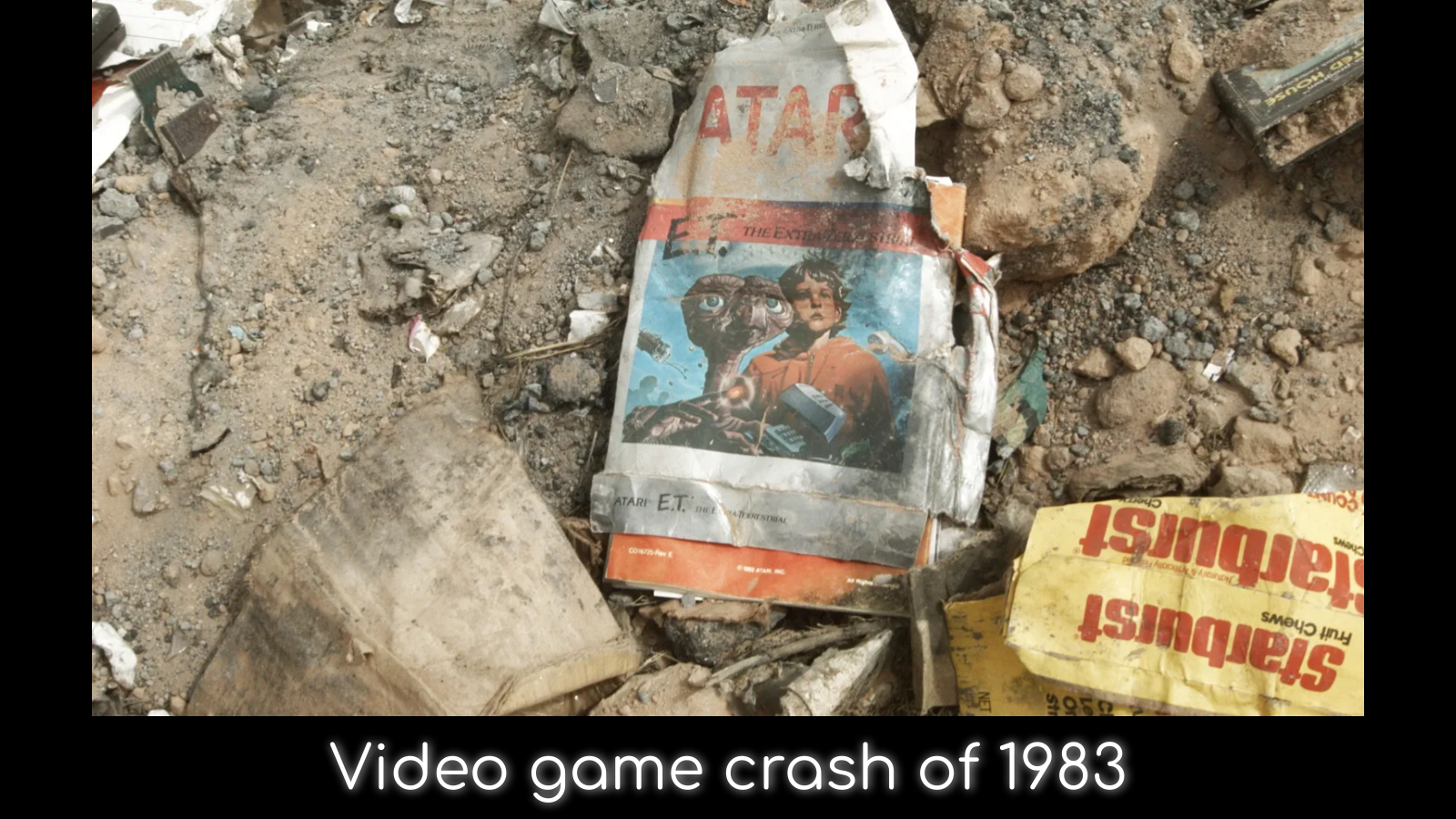
The second canonical crisis. The more well known one: The video game crash of 1983.
We all know the common misconceptions: It was not caused by the the game E.T. The Extra-Terrestrial, which became an emblem of it. And it was only limited to the United States. The game industry in Japan was doing just fine.
If the first crash was due to an overproduction of hardware. The crash of ‘83 was mainly due to an overproduction of software.
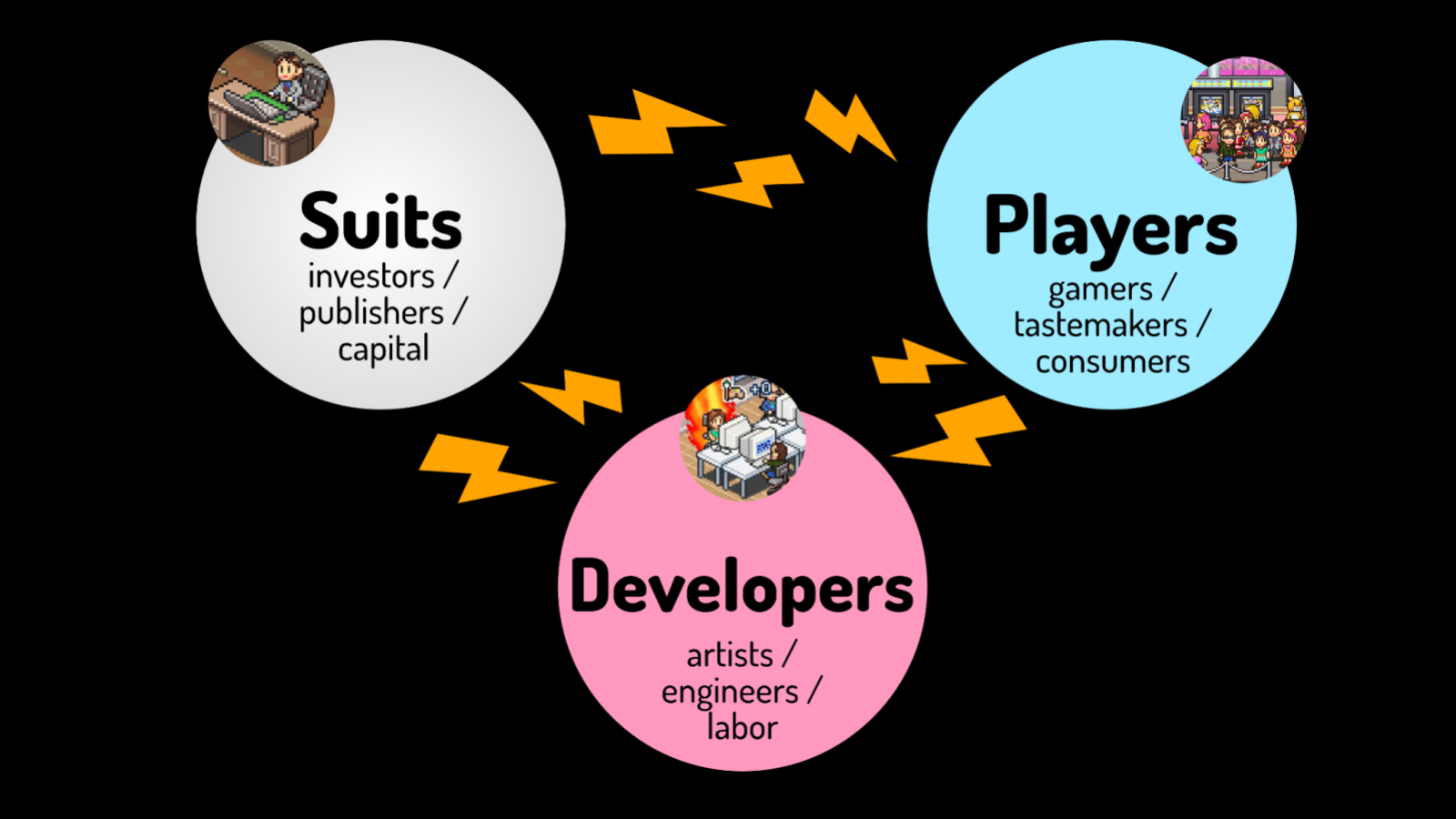
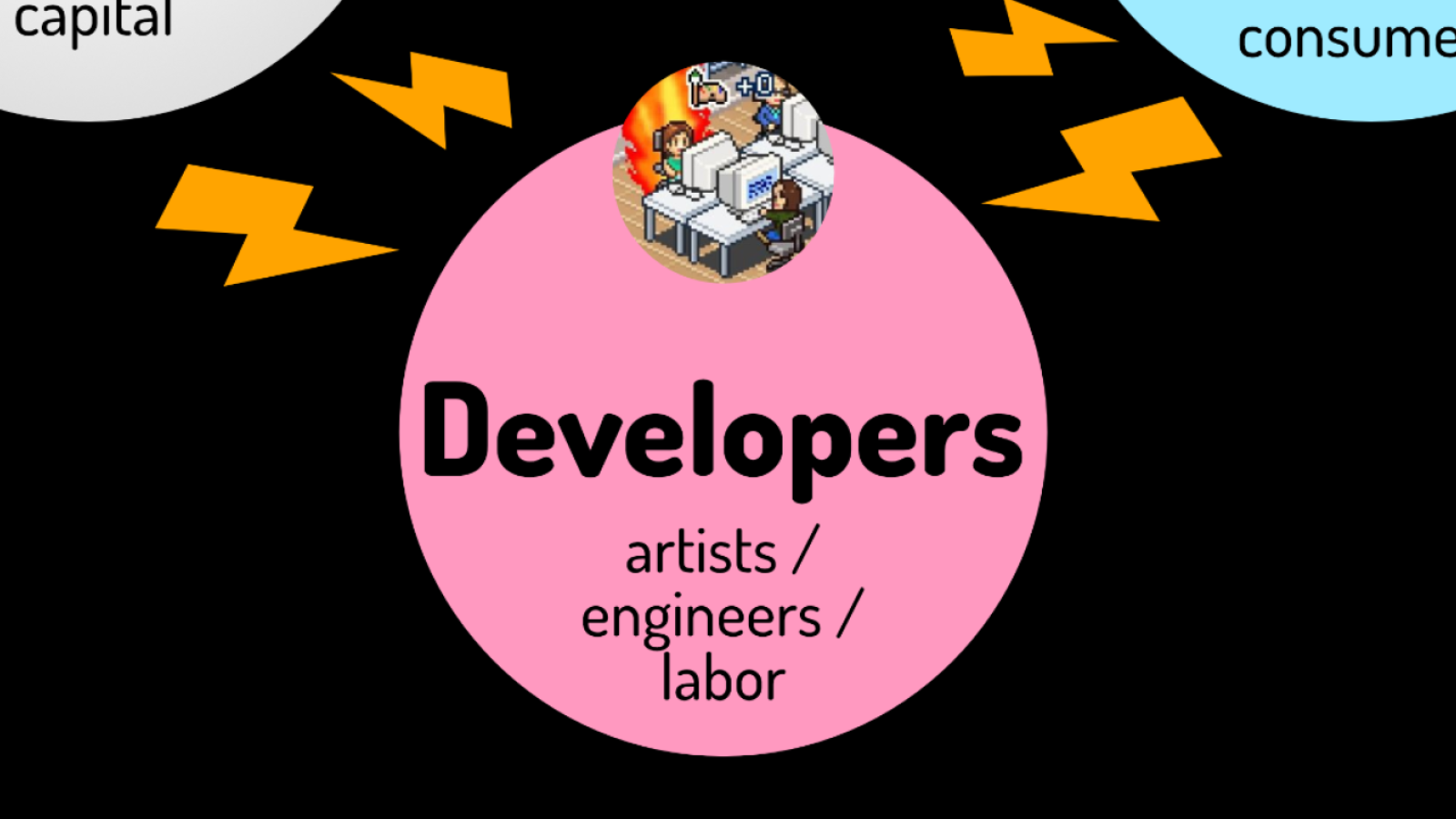
I read the 1983 crisis, as well as the current one as a conflict and misalignment of these three spheres.
Let’s call them Suits, Players, and developers.

The suits are the capitalists/investors.
They can be the blind animal spirits of capitalism that pour money into the game industry, often overinvesting, overshooting the demand. Often withdrawing capital as soon as there are better returns elsewhere.
But they can also be publishers that recognize the cultural dimension of games. Most game publishers understand that culture is a high-risk investment that might not pay off immediately or consistently.
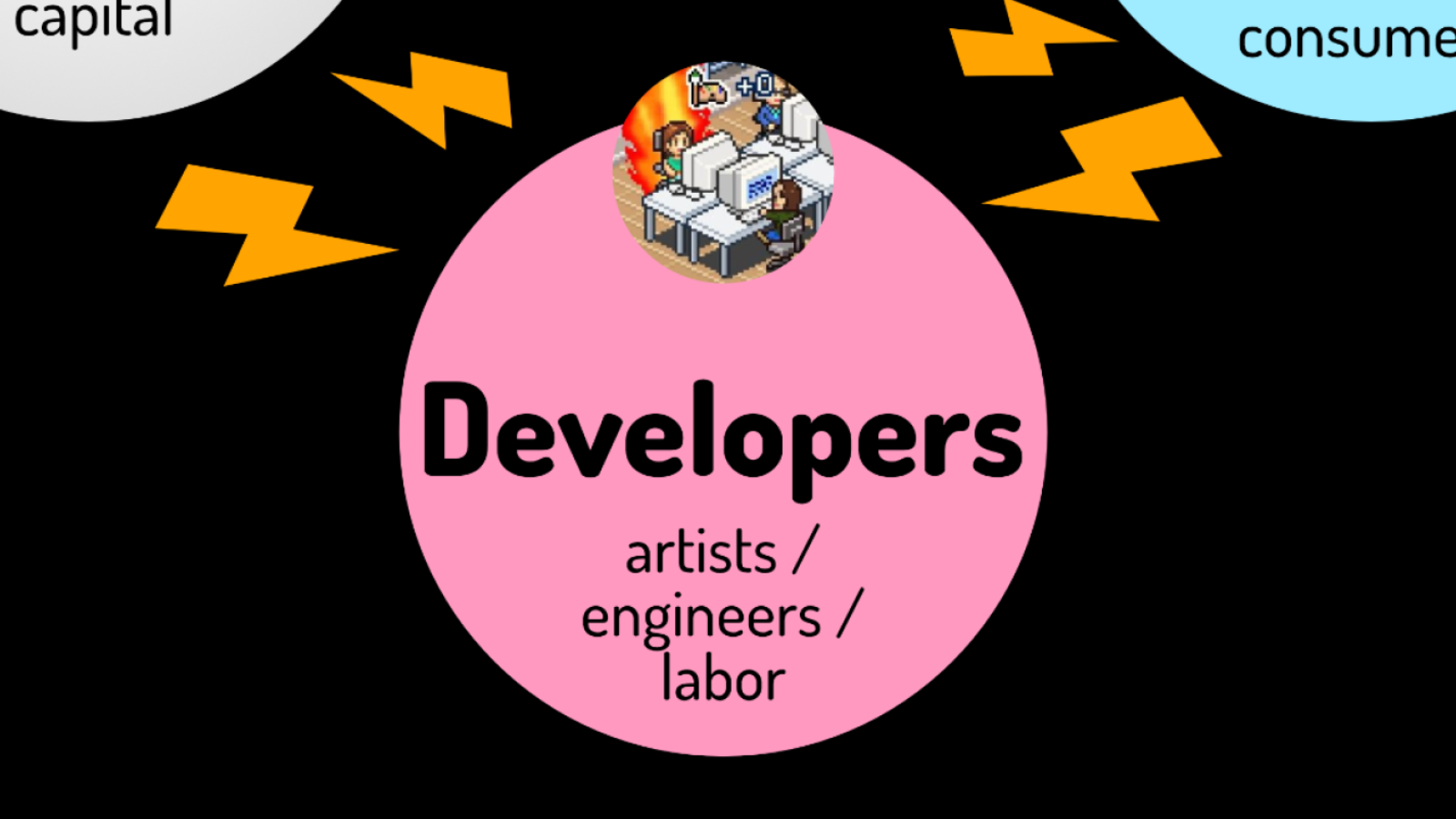
Developers: the makers, the artists, the tool makers.
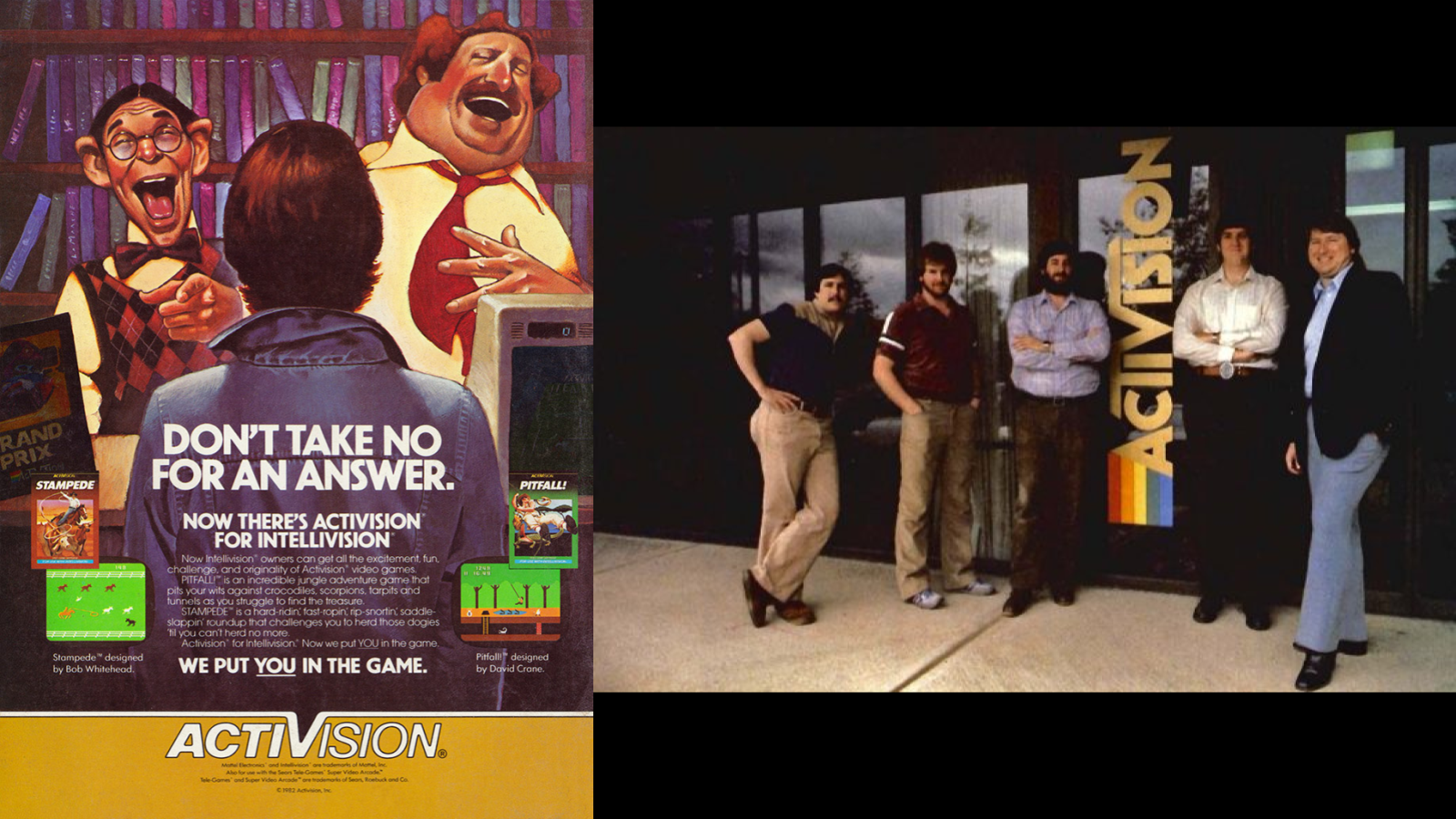
The background for the crash of 1983 is the founding of Activision by disgruntled Atari workers. They were treated badly and they formed their own game studio.
It’s a labor conflict. It’s an affirmation of autonomy from the game creators.
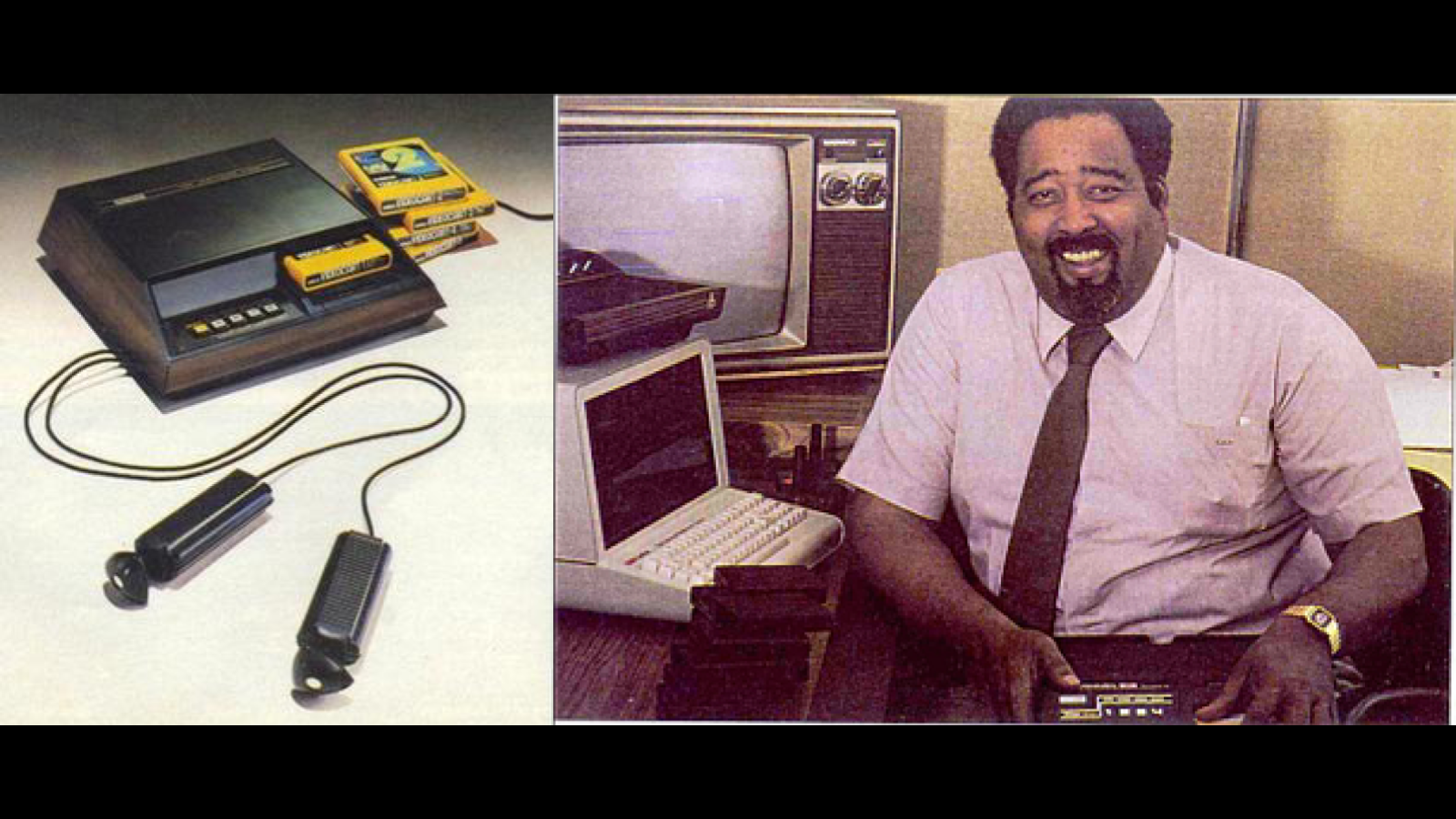
Technologically it’s a side effect of separating gaming hardware and gaming software.
Activision becomes the first independent, third-party studio. They are successful. Then a plethora of developers emulate them. They are fueled by cynical investors pushing for bad adaptations, cynical cash grabs.
I honestly believe most developers just wanted to make something cool in a cool new medium. They just were not as experienced as the Activision employees in the emerging art of game design. Also, Activision aggressively raided the best talents in the industry.

An explosion of independent game makers is not catastrophic per se’. Who doesn't want an abundance of cultural products to choose from?
But in 1983, what fails is the filtering on the consumer side.
No internet game culture and discours.
Game journalism wasn’t influential yet.
Magazines were monthly, and would review the releases too late.
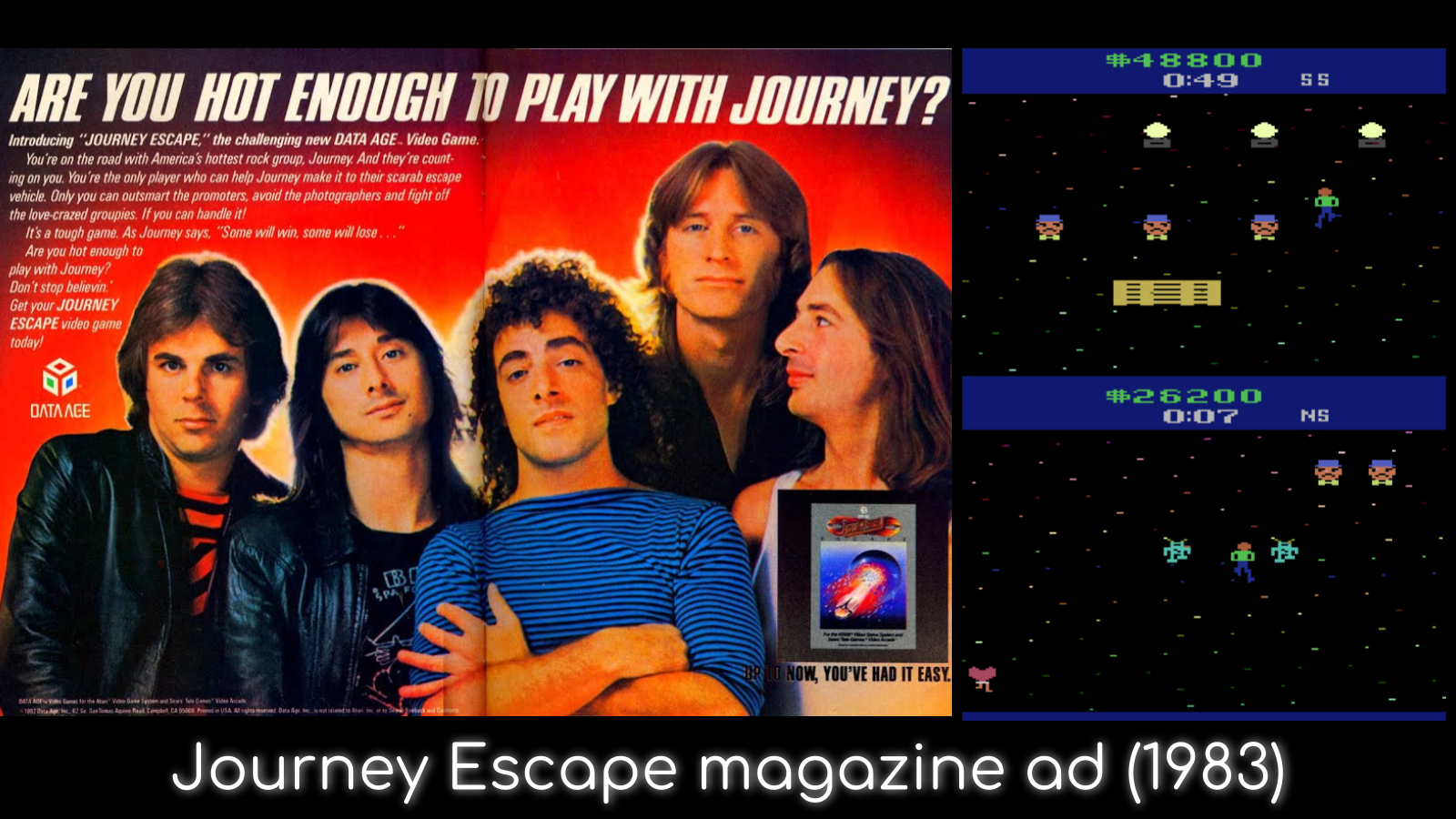
People bought games based on licenses, ads, and box art.
I’m too young to remember this Journey game (one of the TWO games that star the rock band Journey).
But I certainly bought some terrible games based on the box art alone back in the early '90s.
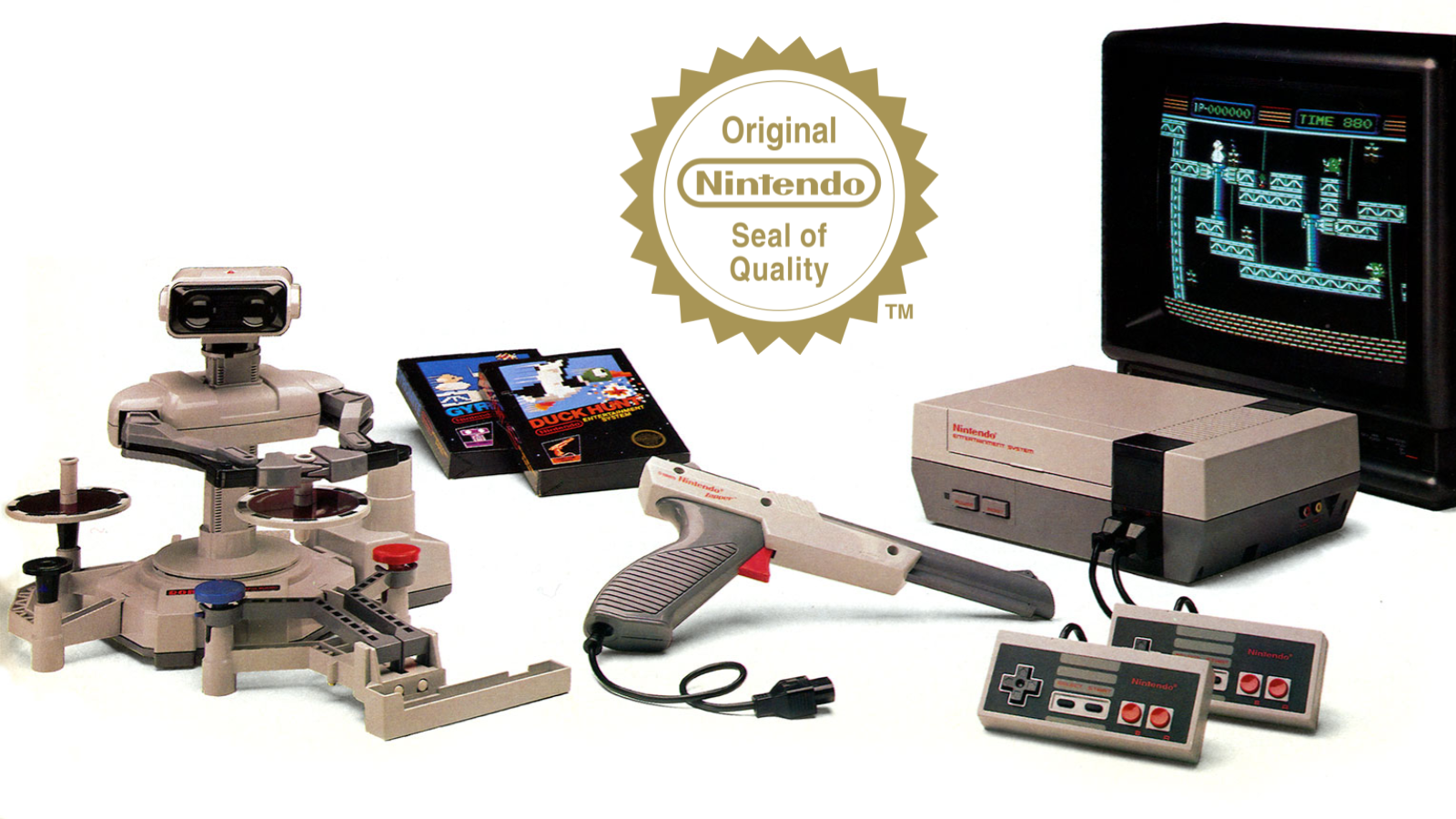
The common narrative is that the Nintendo NES saves the American game industry after the crash and kickstarts the next generation of consoles.
Visually speaking games move from abstract symbolic representations to iconic representations influenced by manga.
Nintendo succeeds due to a tight control over the games that run on the console.
They slap a Seal of Quality on them to communicate that those games are quality-controlled. Not like those bad games from 1983.
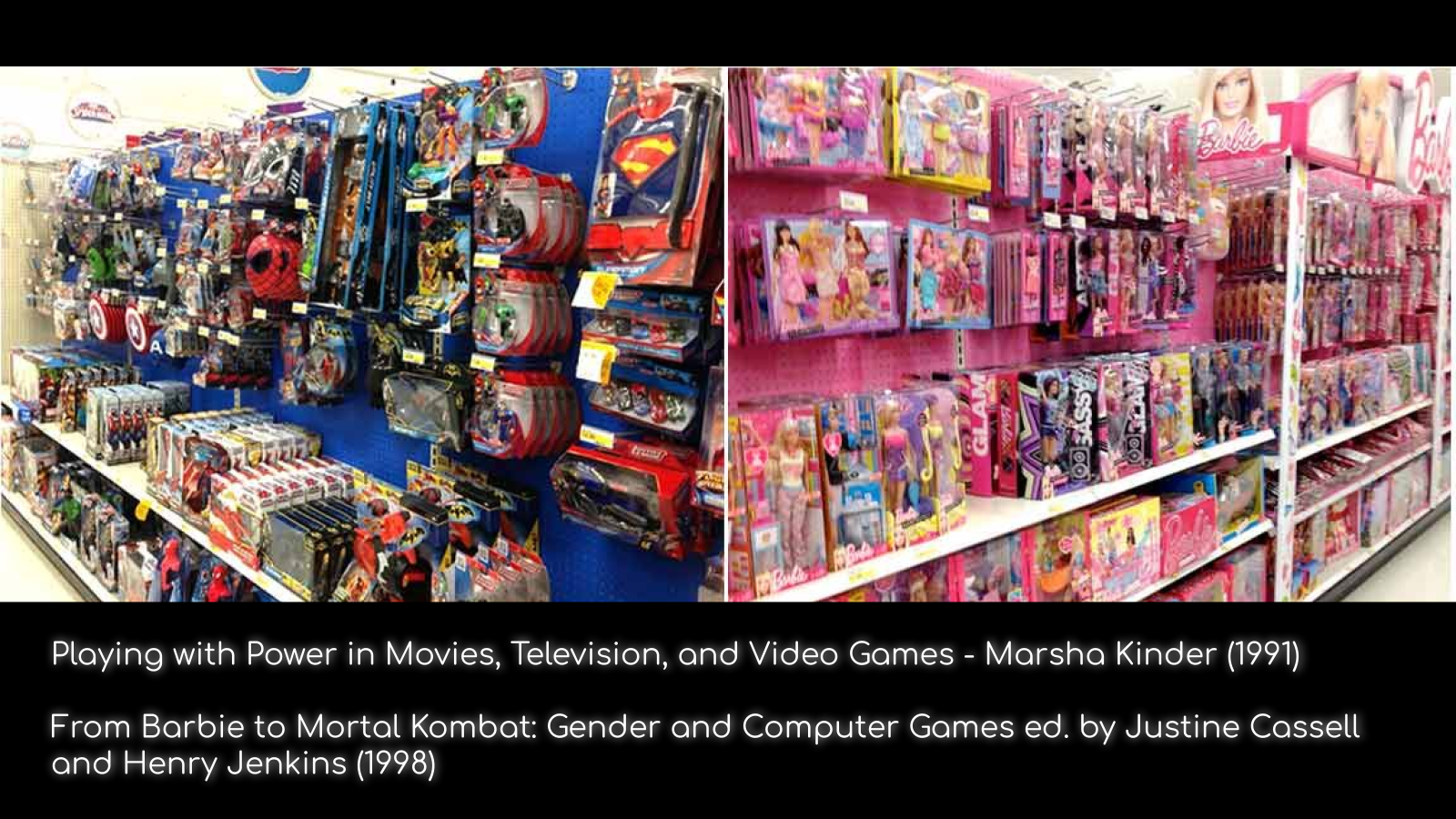
To me this is the biggest cultural outcome of this crisis and the following rebirth.
Video games are marketed in toy stores. Toy stores at that point are gender-segregated. The blue aisle and the pink aisle. Nintendo picks the boys section.
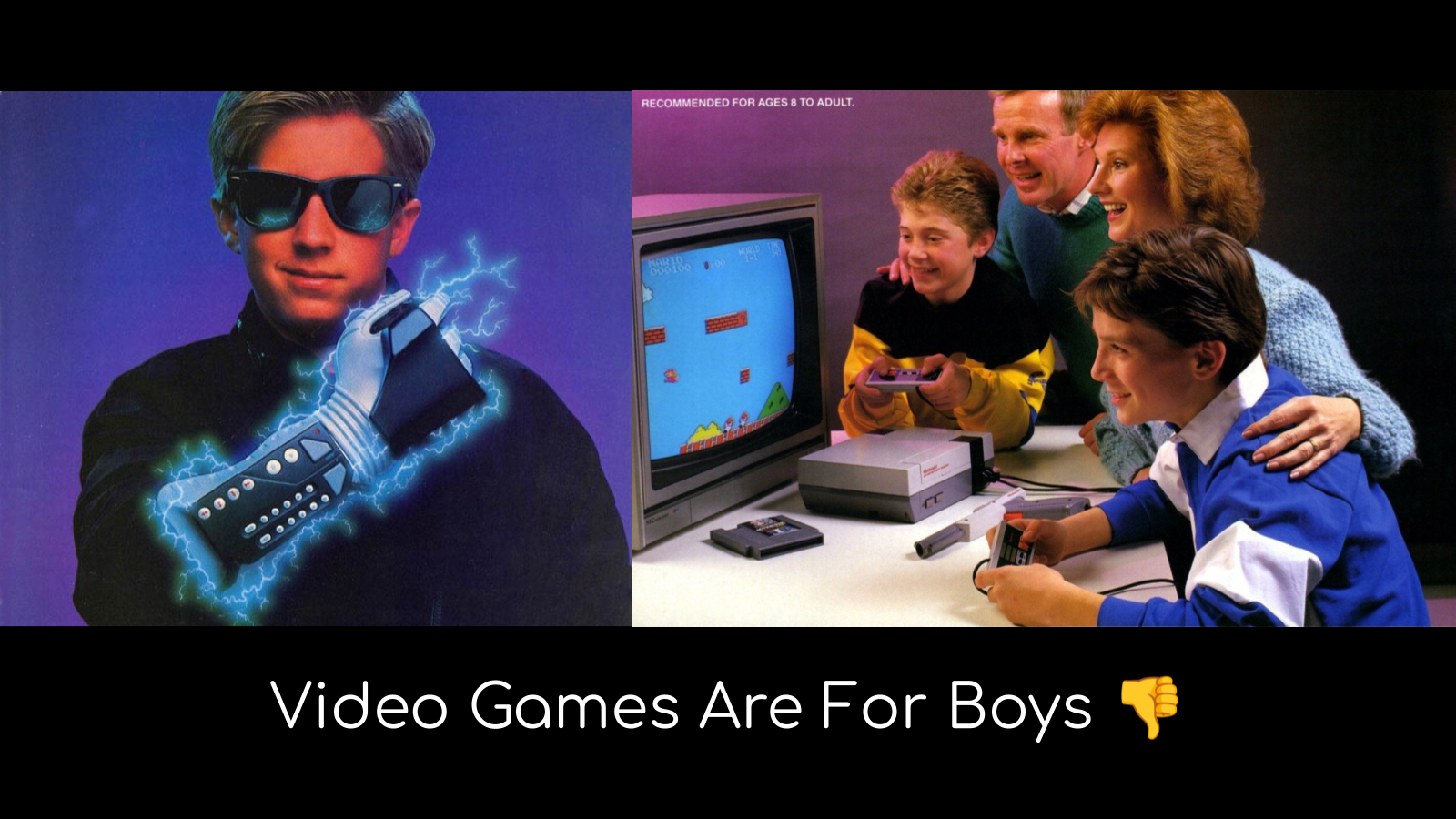
Nintendo of America links videogames to masculine toy culture. Other companies follow.
And video games are part of a bigger trend that makes computers and digital technologies male-coded.
We are still paying the price of this gender gap in technology.

I would argue there is another more insidious effect of this crisis.
Which is the idea that all commercial video games should have a baseline of quality.
This is a bad outcome to me, because it implies a gatekeeping authority And a universal taste. Which might disregard niche titles or games that are too ahead of their time.
Also, the first step to making good games is making bad games.
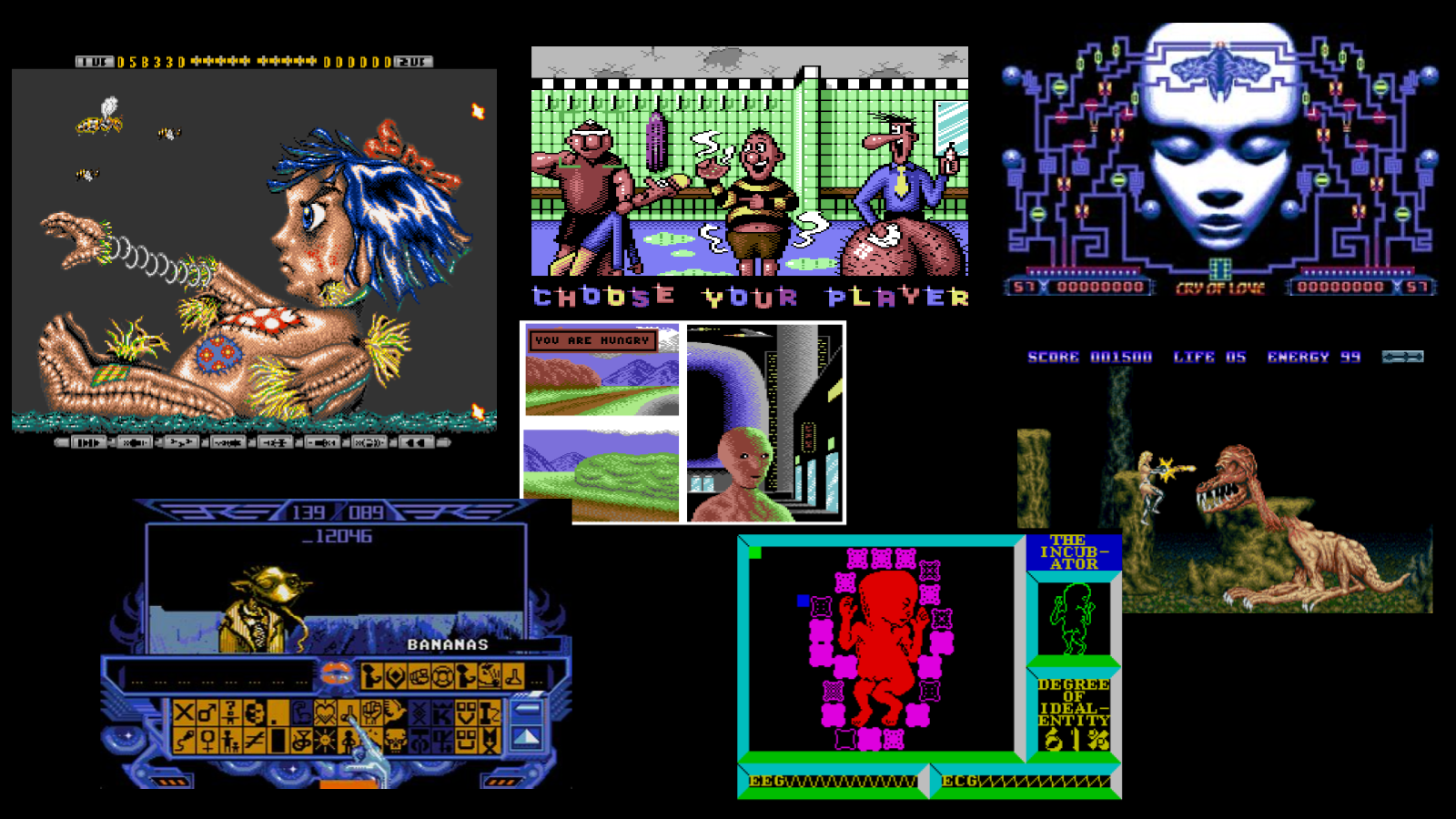
You can contrast the US game industry of the late 80s and early 90s
With the independent development scene in Europe, especially in the UK.
Small studios made games for home computers like the ZX Spectrum, Commodore 64, Amiga and PC.
A lot of these games were bad and unsuccessful but some were trying new ideas, new forms of gameplay, unencumbered by platform gatekeeping.
And they were discussed and filtered by a specialized independent press which was more developed in the UK.
Additionally, I would argue that the rampant piracy on these systems meant that players could try riskier games with fewer regrets.
This was the opposite of a mass extinction. It was a Cambrian explosion of genres and studios.
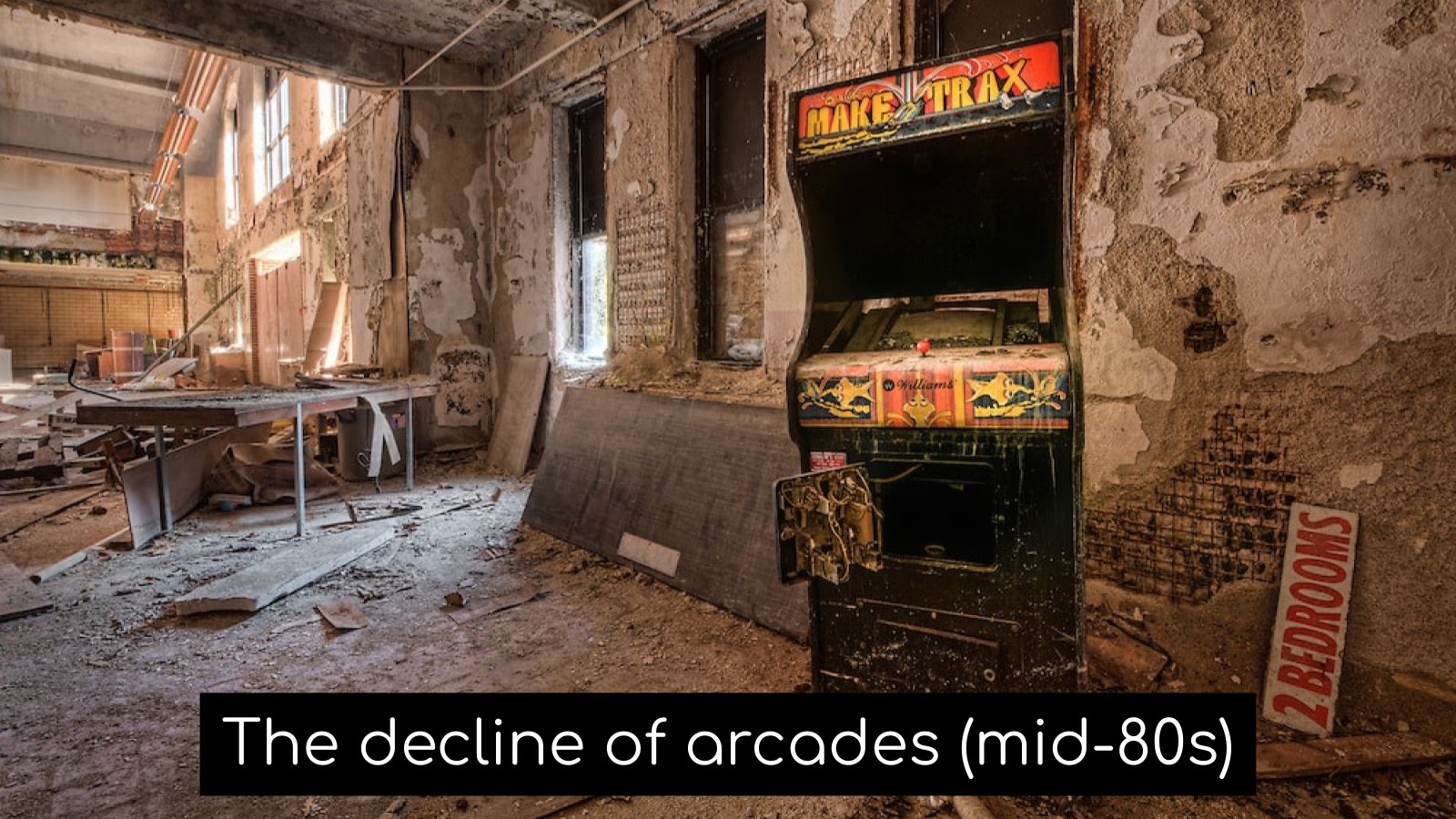
There is another notable mass extinction happening around the same time, in the mid 80s onward.
The slow decline of coin-operated machines due to competition from consoles and home computers.
Gaming becomes a more private, domestic affair.
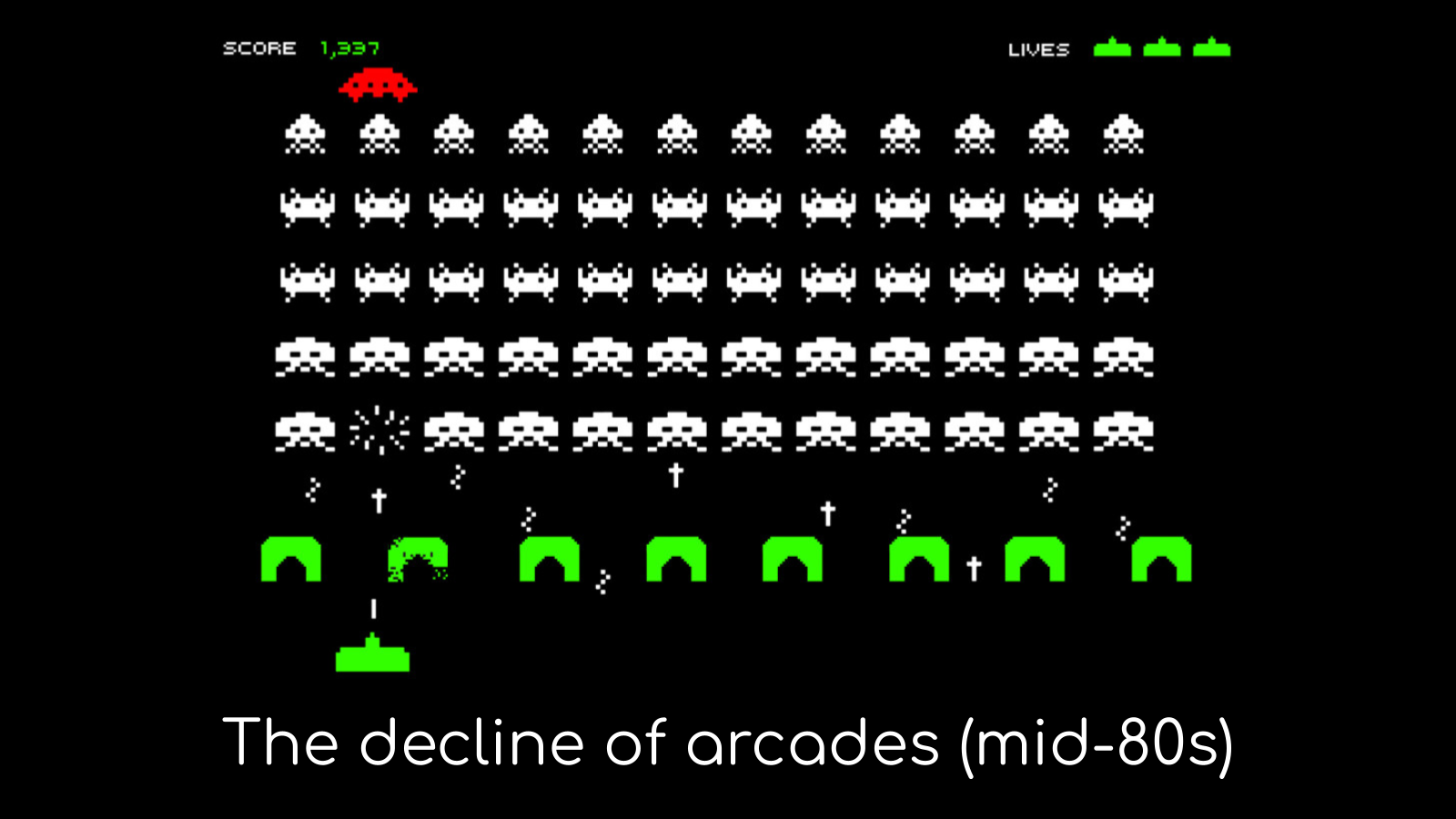
Culturally, what goes extinct is a type of short-form game that is easy to learn and difficult to master.
A game that gets harder and harder and compels you to insert another coin or leave the machine.
This meta-genre disappears because its monetization method disappears.

Of course there are modern arcade games, that use retro graphics or gameplays inspired by arcade games, but they adapted to the expectation of duration and depth of home gaming.
*It could be interesting to do a hyper-capitalist periodization of video games simply based on how they make money.
From coin-operated machines, to free to play, digital download, subscription plans etc.
These monetization strategies deeply affect how games look and play, which genres succeed, and which ones disappear.
The cultural prominence of the premium format (say, a $60, 20+ hour AAA game or a $20, 5+ hour indie game) can make both players and developers forget how profoundly games are shaped by monetization. The premium format—which, as I'll discuss later, is currently in crisis—is a convenient, liberating blank slate for developers. They only have to figure out how to turn their vision into a compelling, high-quality experience that lasts for a broadly accepted amount of time, rather than designing all sorts of tricks and expedients to persuade players to reach for their wallets.
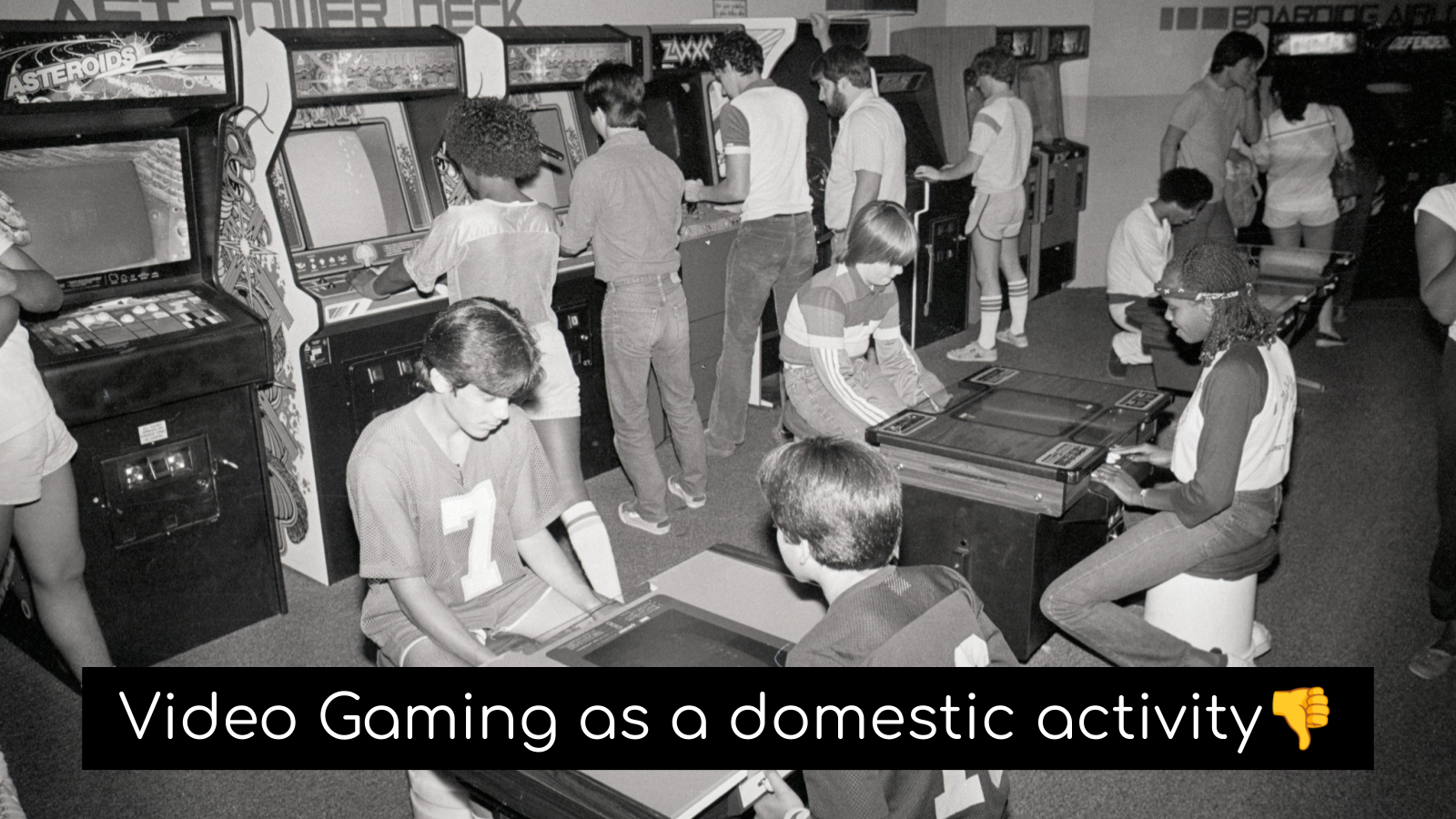
I’ve never been super attached to arcades but this extinction matters to me as an artist/activist.
As observed by JC Hertz in Joystick Nation and many others.
In the segregated United States the arcade used to be one of the few places where kids from different neighborhoods, schools, and social classes came together.

As I mentioned at the beginning of this talk I run a pop-up neo-arcade.
I solved the problem of monetization by simply decommodifying the games.
It’s a low-budget passion project It doesn’t make any money But it doesn’t lose much money either.
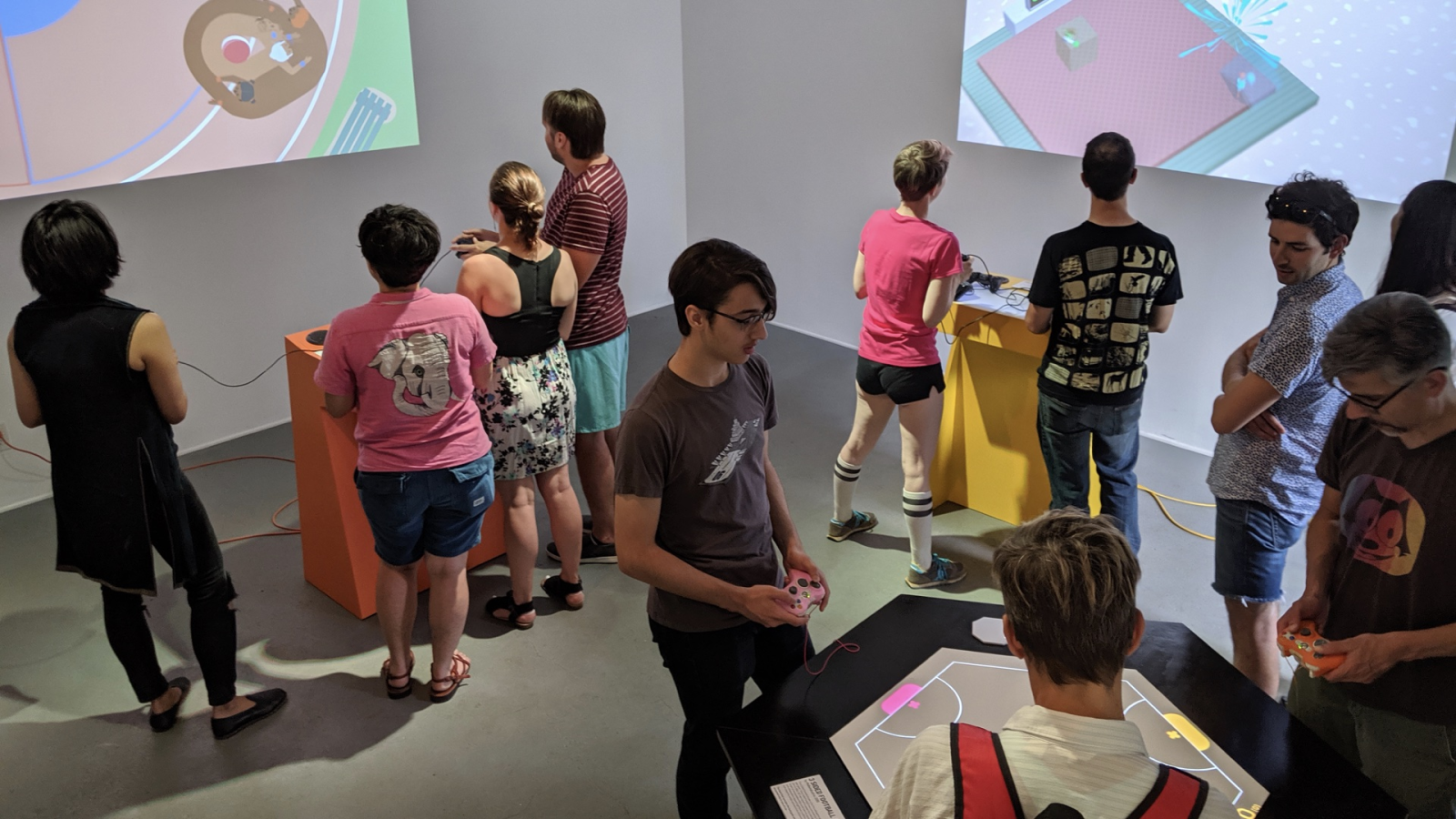
LIKELIKE doesn’t always transcend racial and class divisions because it’s more of an art gallery than an arcade.
But it does intercept non-gamers.
Every month I see people playing independent games for the first time at our shows.

Wonderville in Brooklyn and various retro venues like Barcade don’t charge quarters to play. But they are financially sustainable by selling food or drinks on the premises.
We are bringing back the social situation of penny arcades. It’s a de-extinction project.
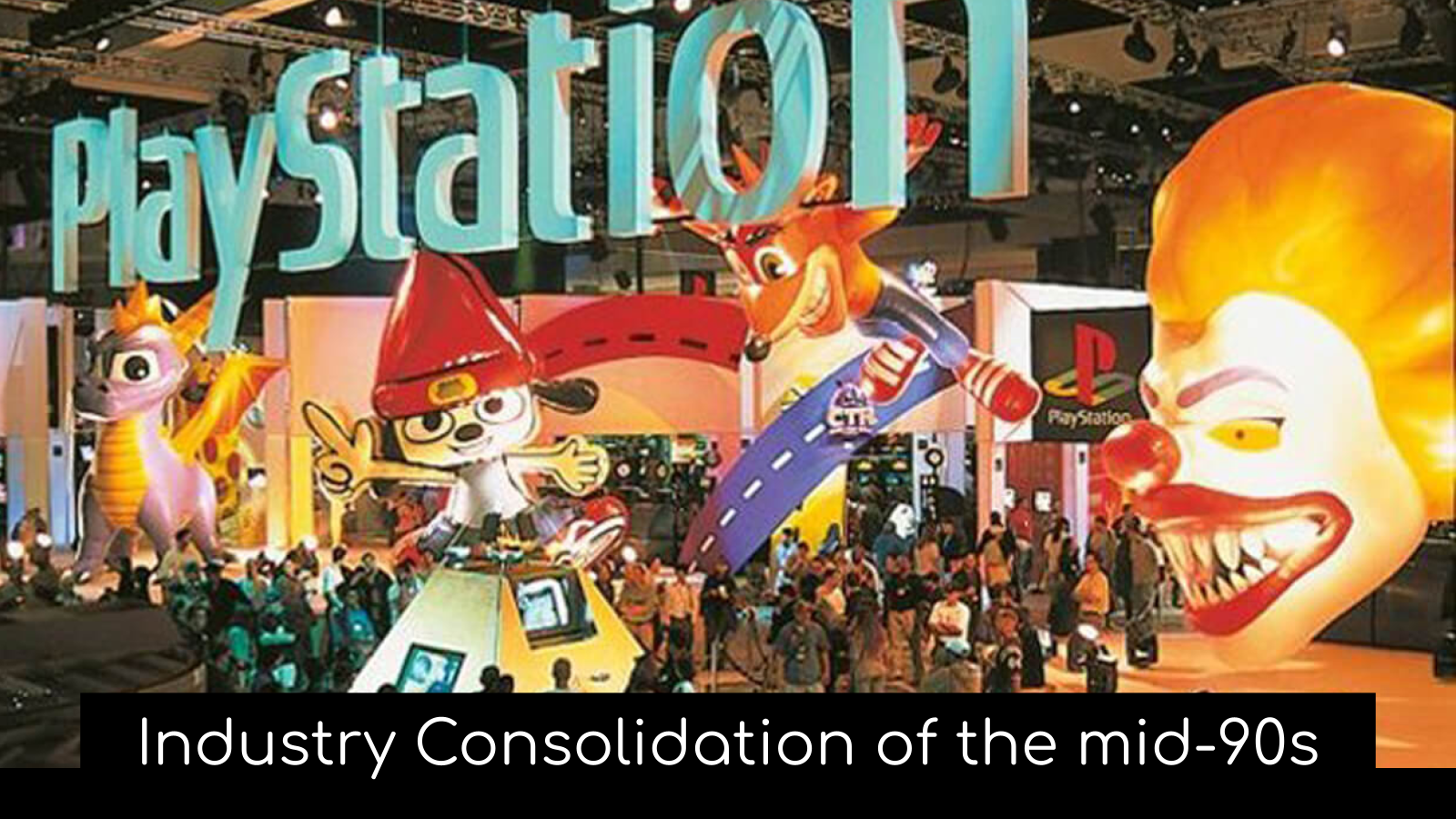
Another mass extinction is related to the game industry consolidation of the mid-90s.
Again, I’m revisiting the canonical and Western-centric accounts.
It’s not a crisis, but a techno-cultural shift.
On the technological side you have multimedia computer and CD-ROMs which increase the capabilities for content by a magnitude.
There is a transition to 3D games that in turn stimulates the development of 3D hardware.
These new affordances call for bigger production budgets and bigger teams.
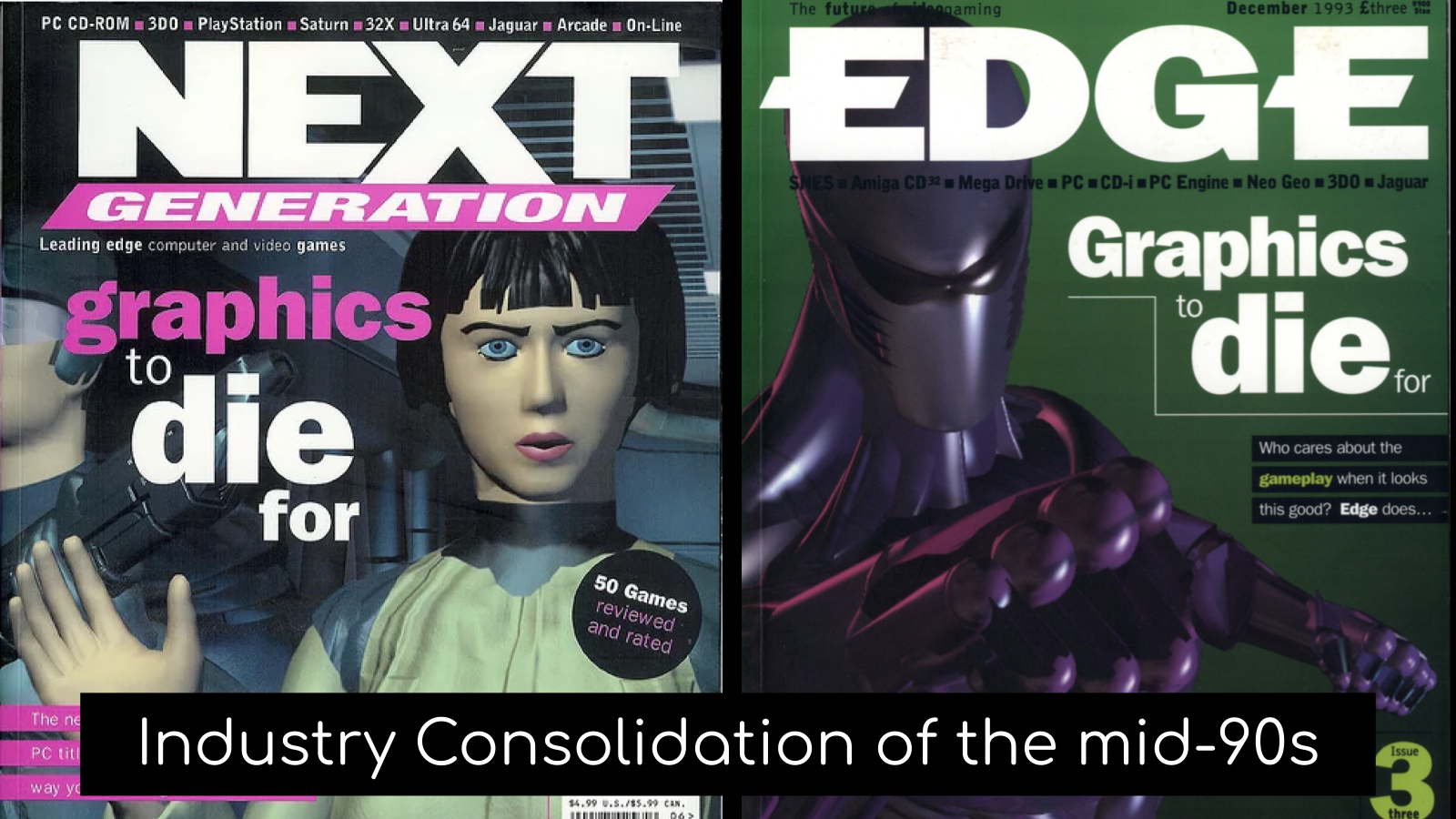
Culturally you have a discourse that creates an appetite for technological innovation.
A march toward visual and systemic fidelity. Toward immersion and cinematic experiences.
On the distribution side, retail consolidates as well and favors big budget titles.
It’s a good time for the suits, not always good for the developers’ autonomy.
A few big publishers acquire the successful small studios. The small studios that can’t compete shut down.
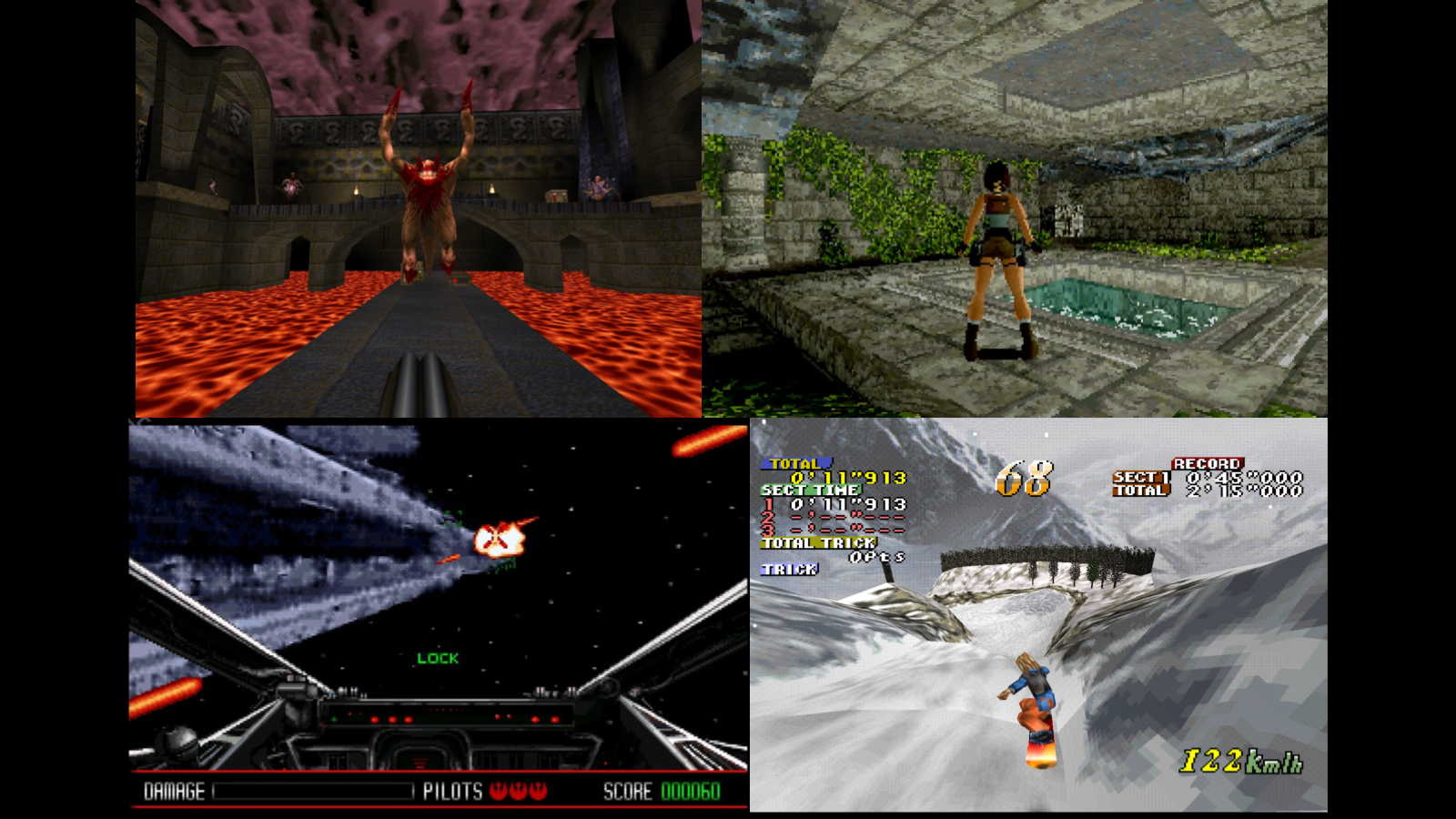
And while many new genres emerge thanks to technological advancements and bigger budgets
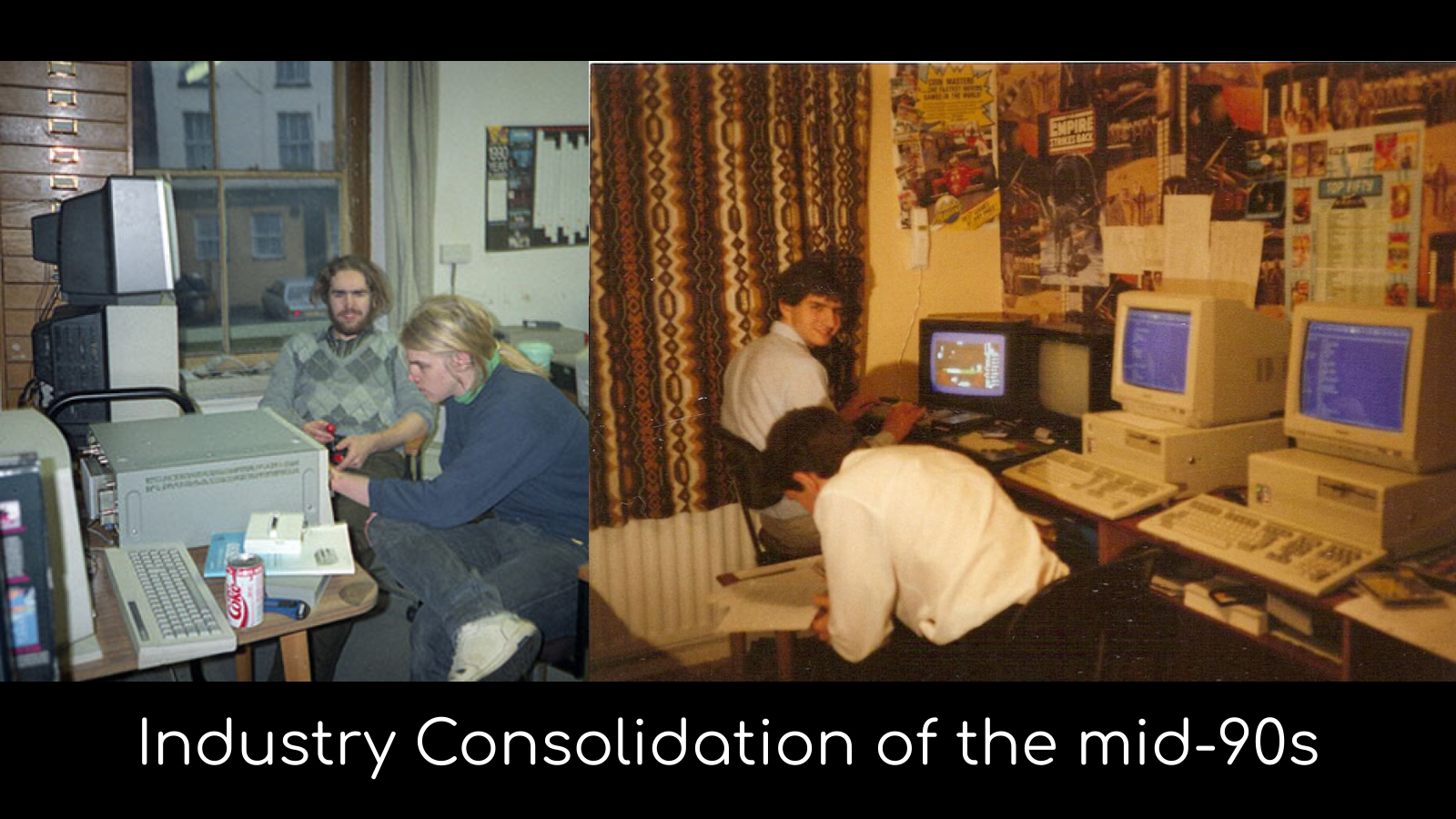
What disappears is a mode of independent development that is more personal and self-directed.
Because you can’t make a 3D game for CD ROM in a bedroom with your 3 high school friends.
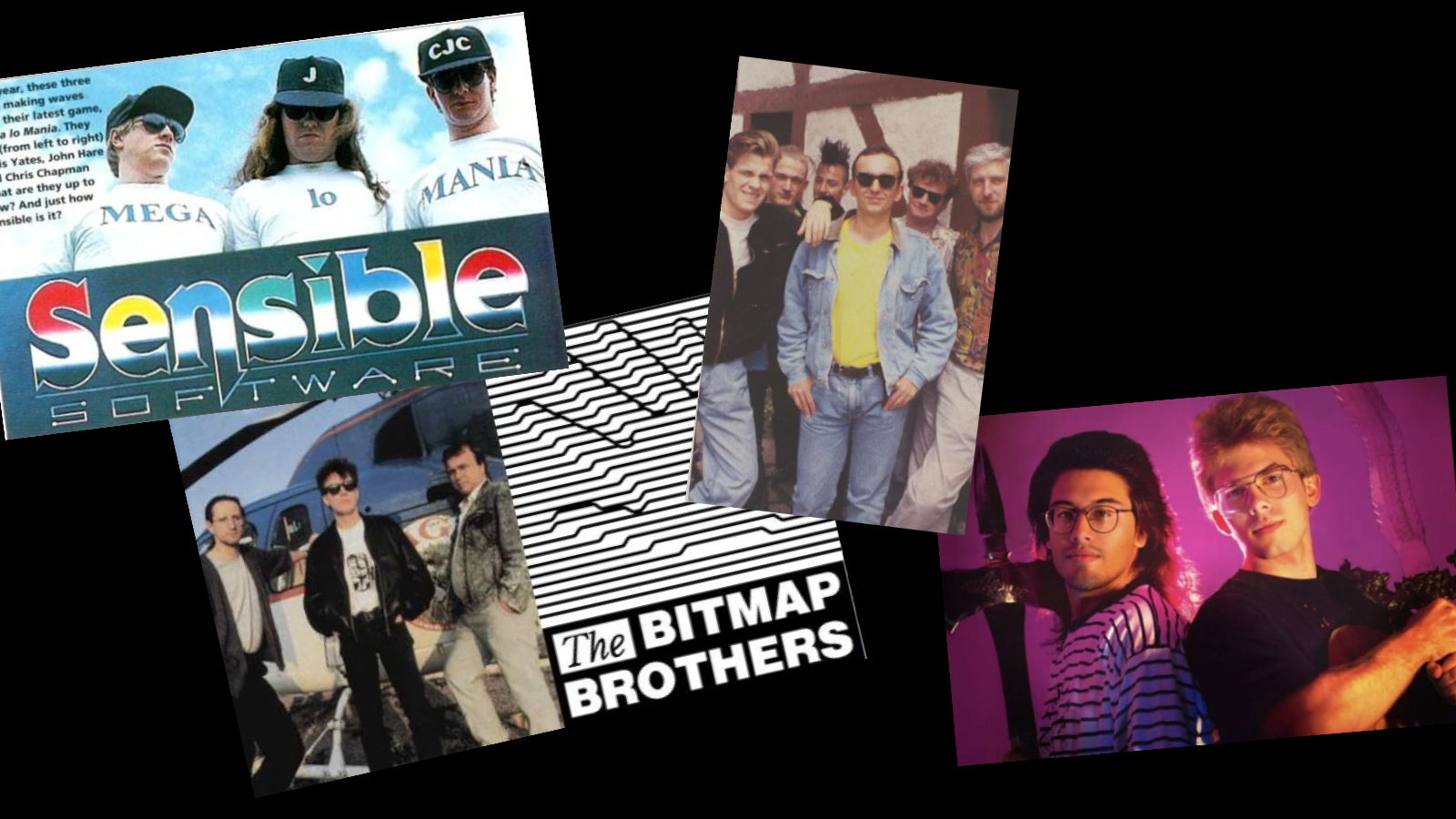
Video game development goes from an artisanal endeavor to a cultural industry modeled after Hollywood.
And you see less game developers posing like rockstars.
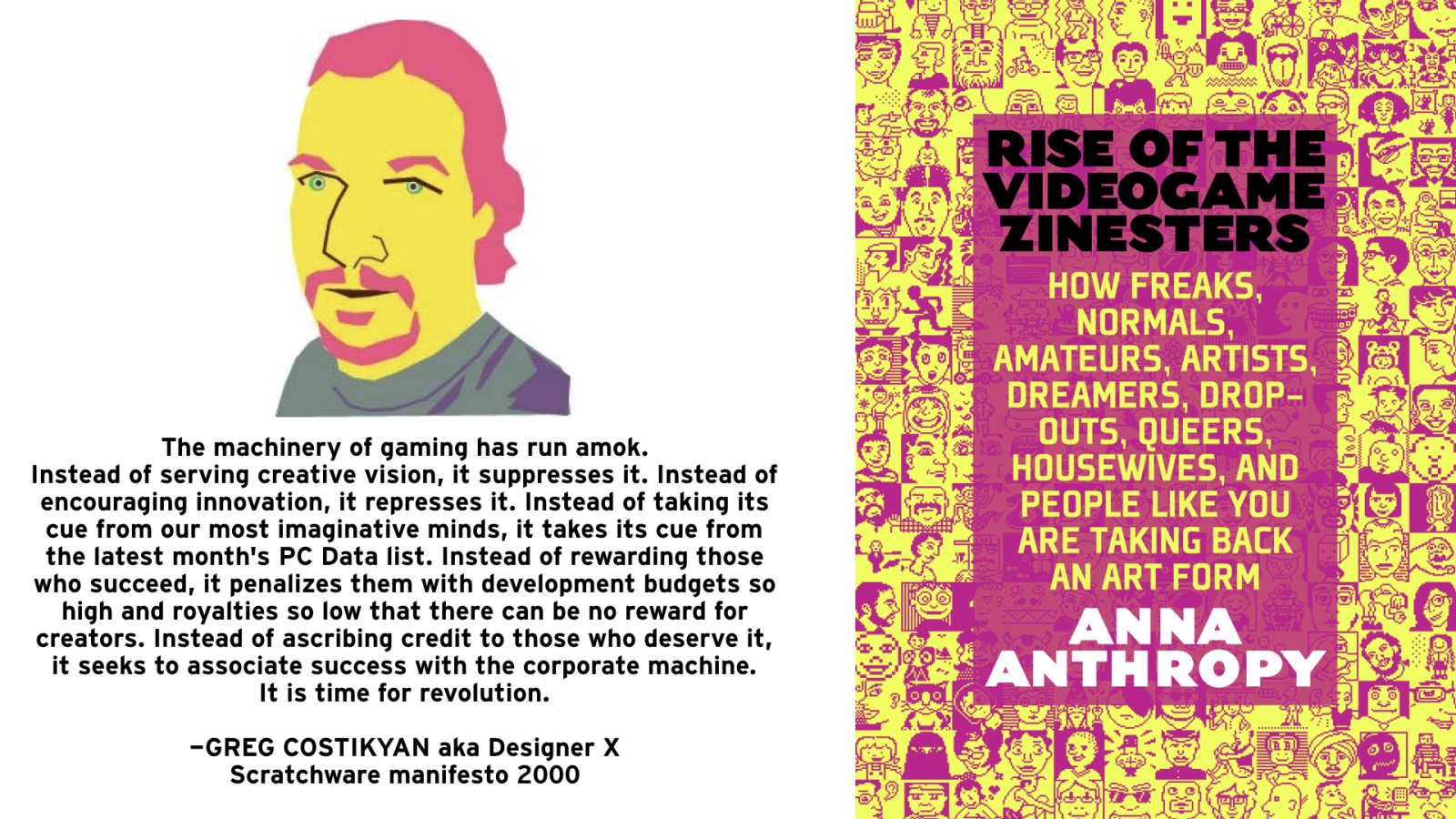
Some American game makers lament this loss starting from the early 2000s with the Scratchware Manifesto.
The sentiment fully explodes in the 2010s with the indie game movement.
The criticism is: Big budgets breed conservatism. As game development industrializes, it becomes more risk-averse. Sequels and franchises dominate the charts.
At the same time exploitation, crunch time, and cyclical layoffs crystallize as standard practices in the industry.
The game industry manages to be both creatively stagnant and precarious.

The rise of independent games has been attributed to technological factors like digital distribution And the democratization of game engines.
But having closely observed this community for the last two decades I rather place it in continuity with other independent movements in other cultural fields. Independent comics, independent movies, punk and indie rock music, maker communities and so on.
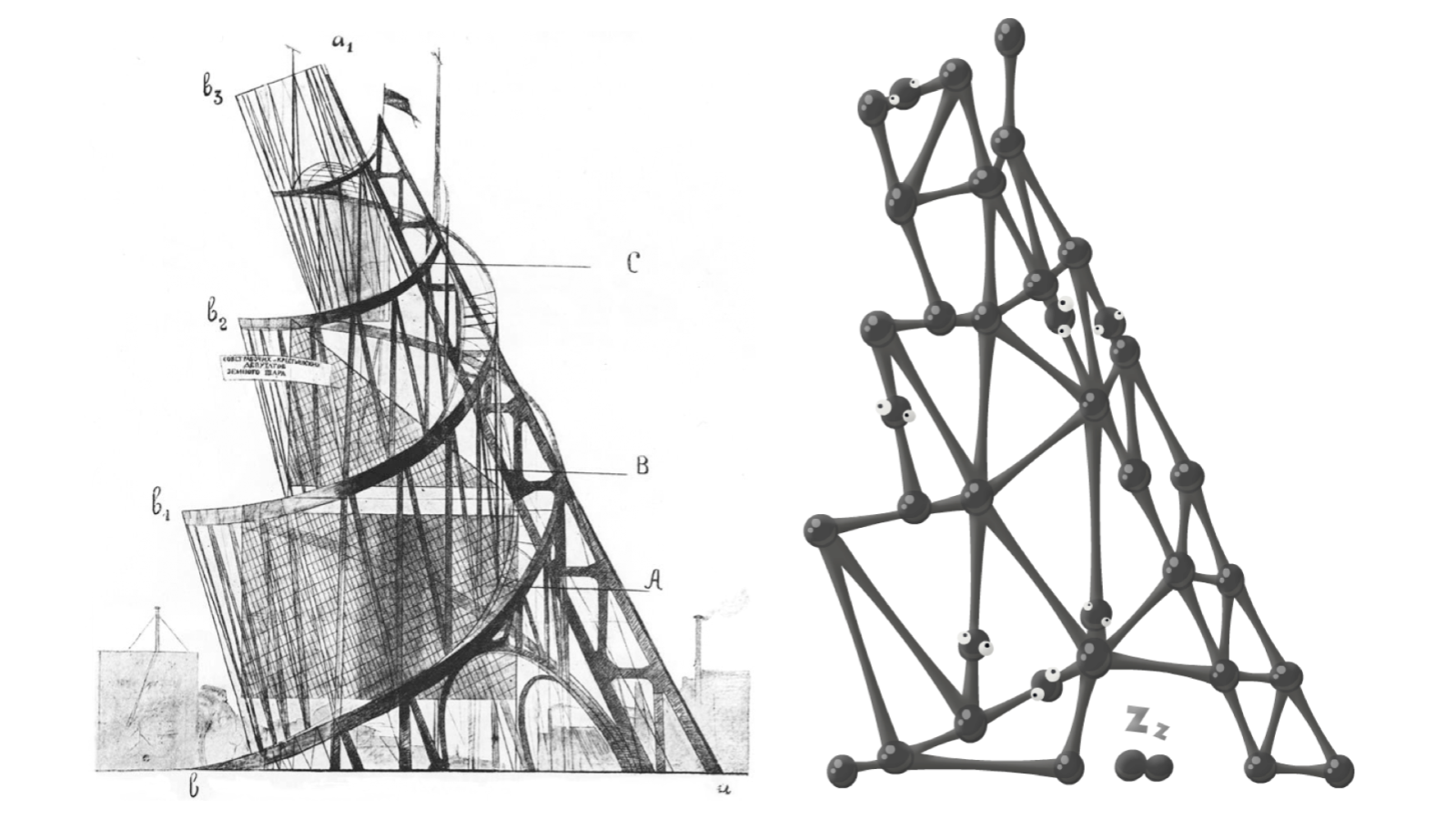
It's a soft rebellion of skilled workers who have an excess of creativity.
A creativity that exceeds the ability of capital to commodify it.
It’s also an attempt to escape the exploitative corporate structures of the mainstream game industry.
An attempt to carve out a niche of autonomy within neoliberal capitalism.
Of course the independent game movement is not a politically coherent revolutionary project.
For many developers it’s just good old entrepreneurship.
But indies have been at the forefront of unionization, workers’ cooperatives, diversity initiatives, solidarity efforts and so on.
Culturally, the indie movement is the opposite of a mass extinction.
It’s another Cambrian explosion of ideas, genres, artists and studios.
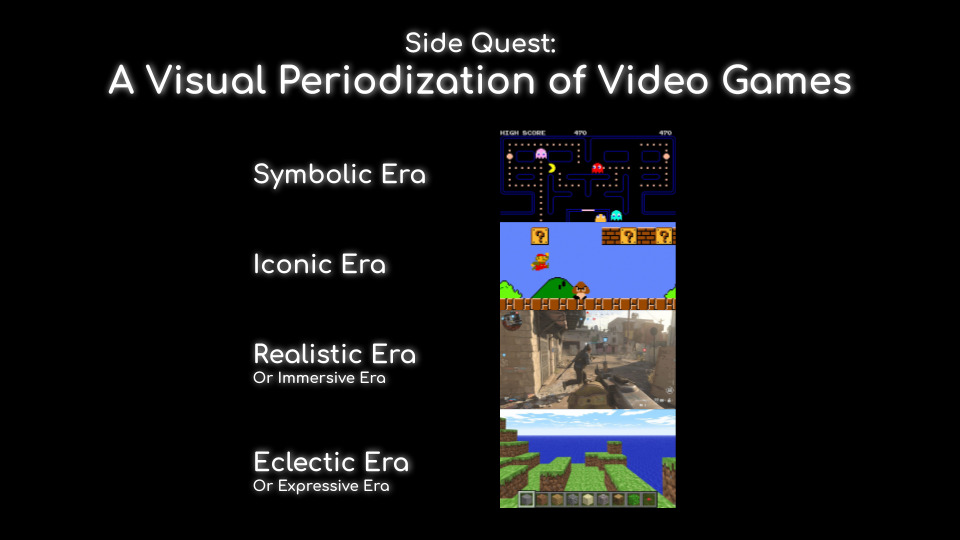
A bit of a tangent: I'm tempted to map these techno-cultural shifts onto a broad periodization of games as visual culture.
These dramatic crises and conjunctures changed the dominant, cutting-edge visual modes - that is, how games are supposed to look.
The crash of 1983 and the rise of Nintendo mark the end of the Symbolic Era, in which games primarily relied on abstract representations and diagrammatic spaces.
The publisher consolidation of the mid-1990s, alongside technological advances in graphics and storage, led to an exploration of the illusionistic, immersive, and cinematic possibilities of video games. The buzzword of the time was "realism," understood primarily as "photorealism," since the question of how games portray reality systemically is endlessly debatable.
I'd place the beginning of this era in 1996, with the release of Quake, Tomb Raider, and FIFA 96. These games mark the full transition to 3D in their respective genres: FPS, action-adventure, and sports.
Of course, iconic representations continued to dominate mobile and casual games throughout the Realistic Era, but I would argue that this space was relegated to a lower cultural status partly because of its visual appearance and cutting-edge-lessness.
I argue that the Realistic Era is followed by an Eclectic Era, in which there are no dominant or preferred visual modes.
Indie games can't, and generally don't want to, compete on visual fidelity, instead embracing whatever style best serves their purposes.
Minecraft, the poster child for indie games going mainstream, is distinctive for its functional "programmer art." Many other indie games breathe new life into Iconic Era aesthetics, updating pixel art and hand-drawn graphics for the twenty-first century. Meanwhile, some indie horror games may adopt narrowly scoped photorealism simply because it serves their expressive goals. At the same time, many AAA titles, such as Overwatch and Fortnite, break with realism and develop highly stylized, high-production-value visual identities.
Minecraft seems like a good turning point for the Eclectic Era, but to stay with the mass extinction theme, I'm tempted to let the Realistic Era symbolically end with the release of GTA VI this year. Grand Theft Auto is the ultimate maximalist immersive franchise. Its next installment appears to be an incremental evolution of the series, designed to fully exploit the capabilities of the latest hardware.
It will be a test of the continued dominance of the realistic/immersive visual mode and, by extension, of the AAA production model that emerged from the publisher consolidation of the 1990s.
I suspect GTA VI will underperform, partly because of changing player tastes, marking the culmination of the "AAApocalypse" I'm going to talk about in a minute.
End of tangent.
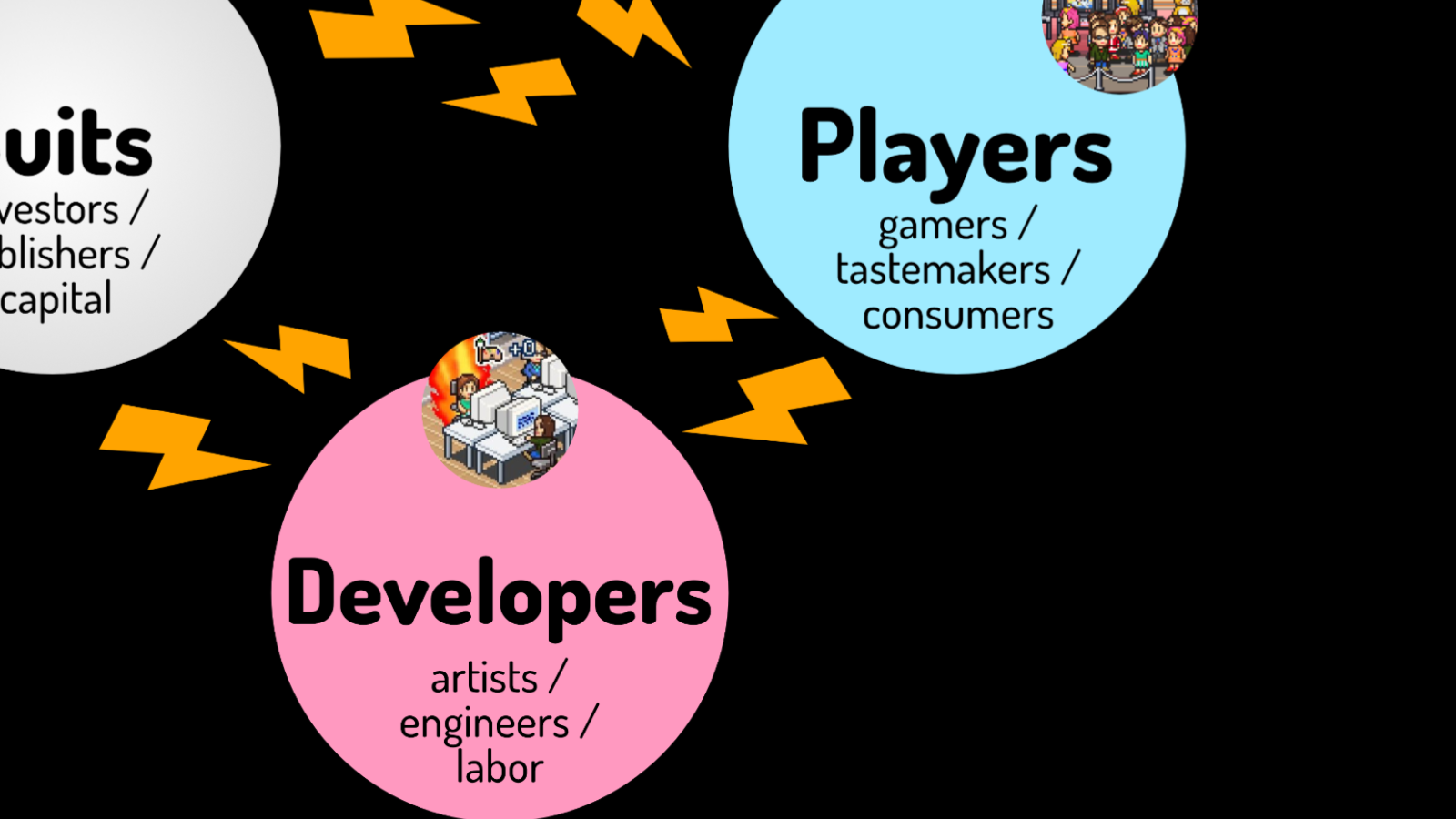
Even if the capitalists have less power in the indie sphere here may still be a misalignment between developers and players.
The appeal of independent game development might be overshooting the demand for independent games.

It’s not surprising that so many people want to make games independently.
The game industry is one of the few tech sector that are not actively ruining our lives and destroying the planet (if you exclude gambling and NFTs).
It’s one of the few creative jobs in which people can still make a living and sometimes even get rich without exploiting others.
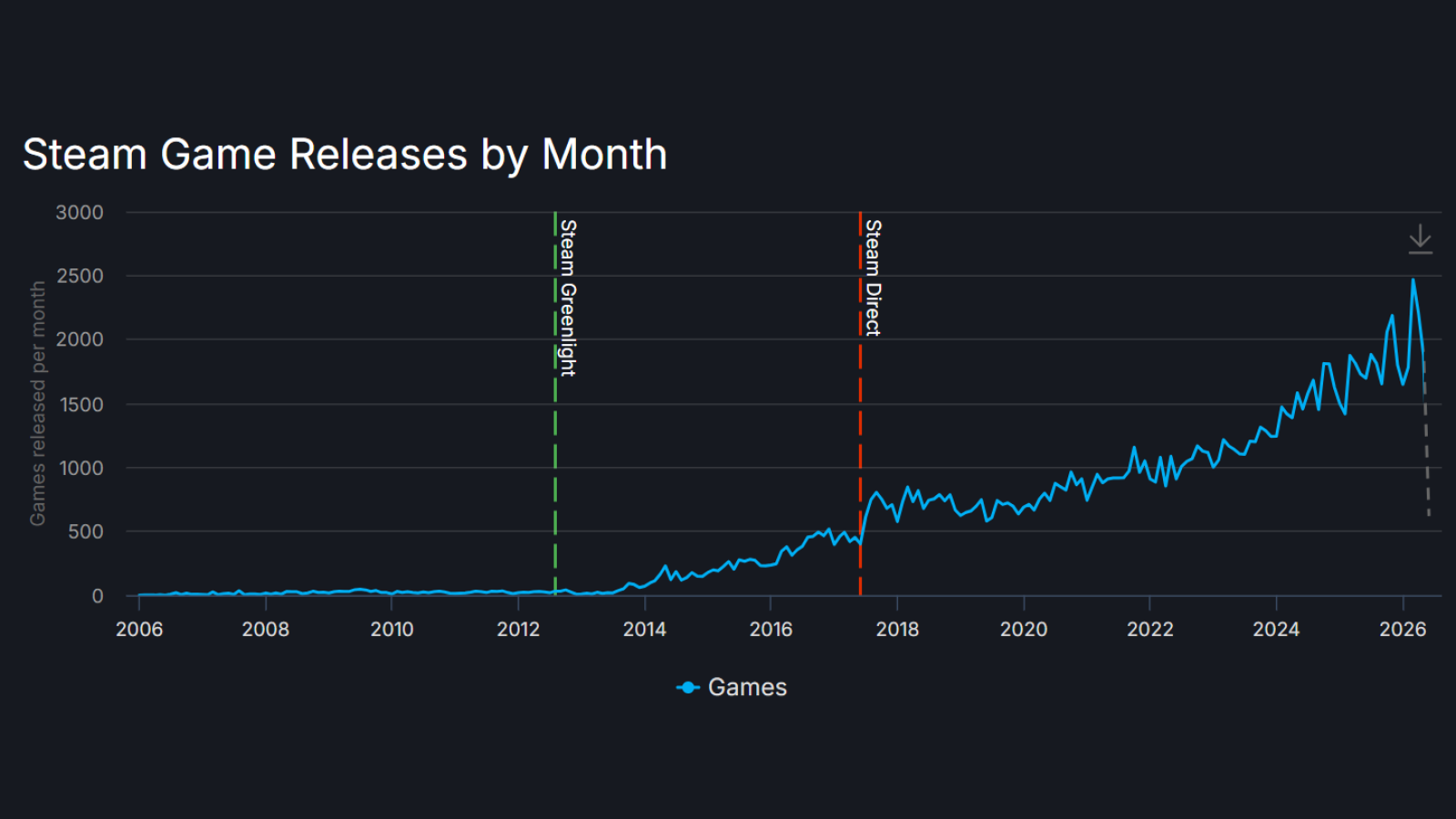
The specter of mass extinction in the independent space
has been dubbed indiepocalypse about a decade ago.
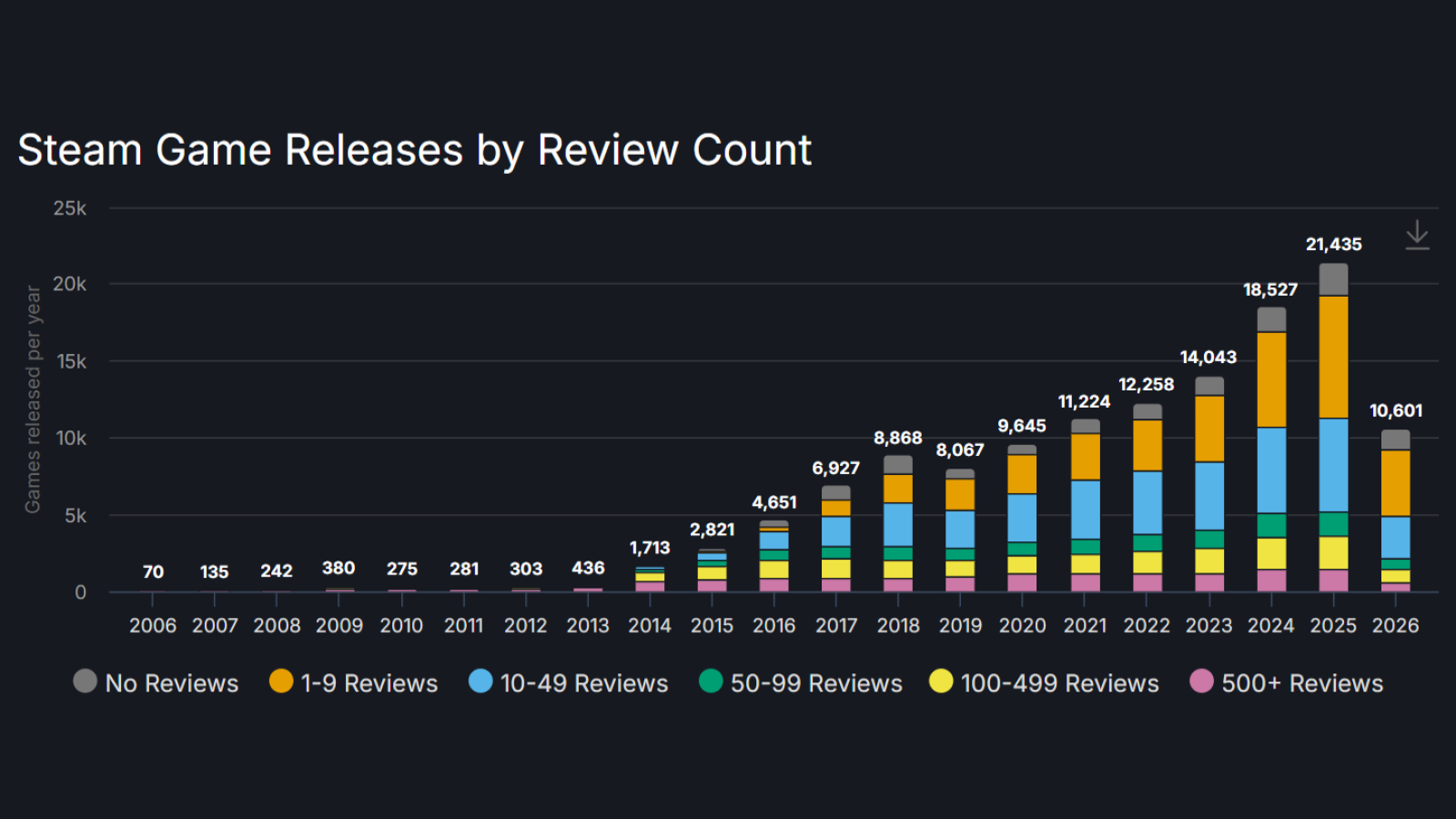
The indiepocalypse generally refers to the seemingly exponential increase in the number of releases, especially in the PC market.
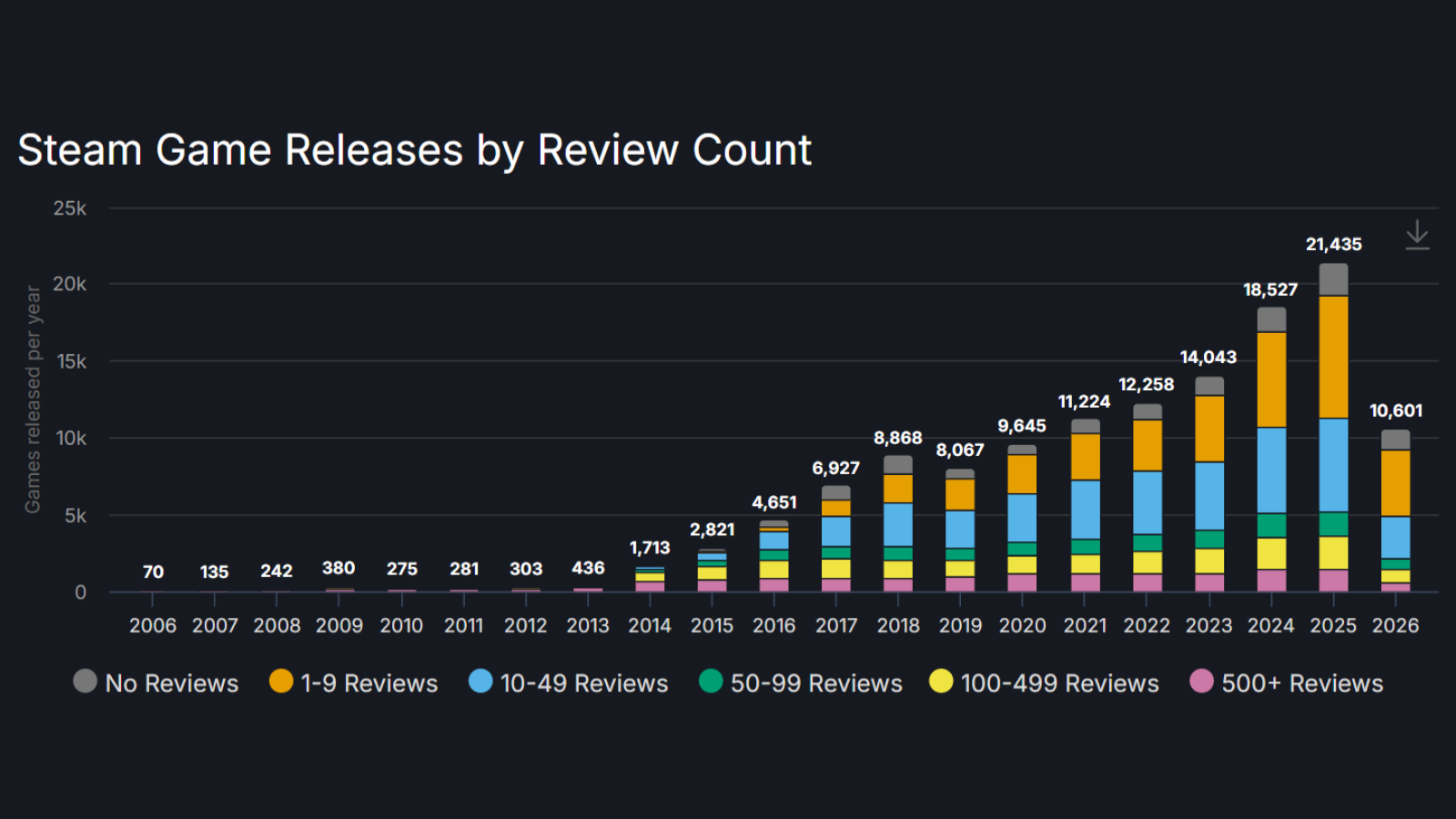
Paired with declining revenues - despite increasing budgets from indie-specific publishers.
In this graph the reviews are an indicator of a game’s success. (Source: SteamDB).
Over two thirds of Steam releases are not commercial successes by any standards.
And one might be tempted to compare this trend to the Pong overproduction crisis of 1977 Or the crash of 1983.
But I genuinely believe that many of these unsuccessful games are not bad or poorly made.
In a previous talk I argued that the indiepocalypse is an attention economy crisis.
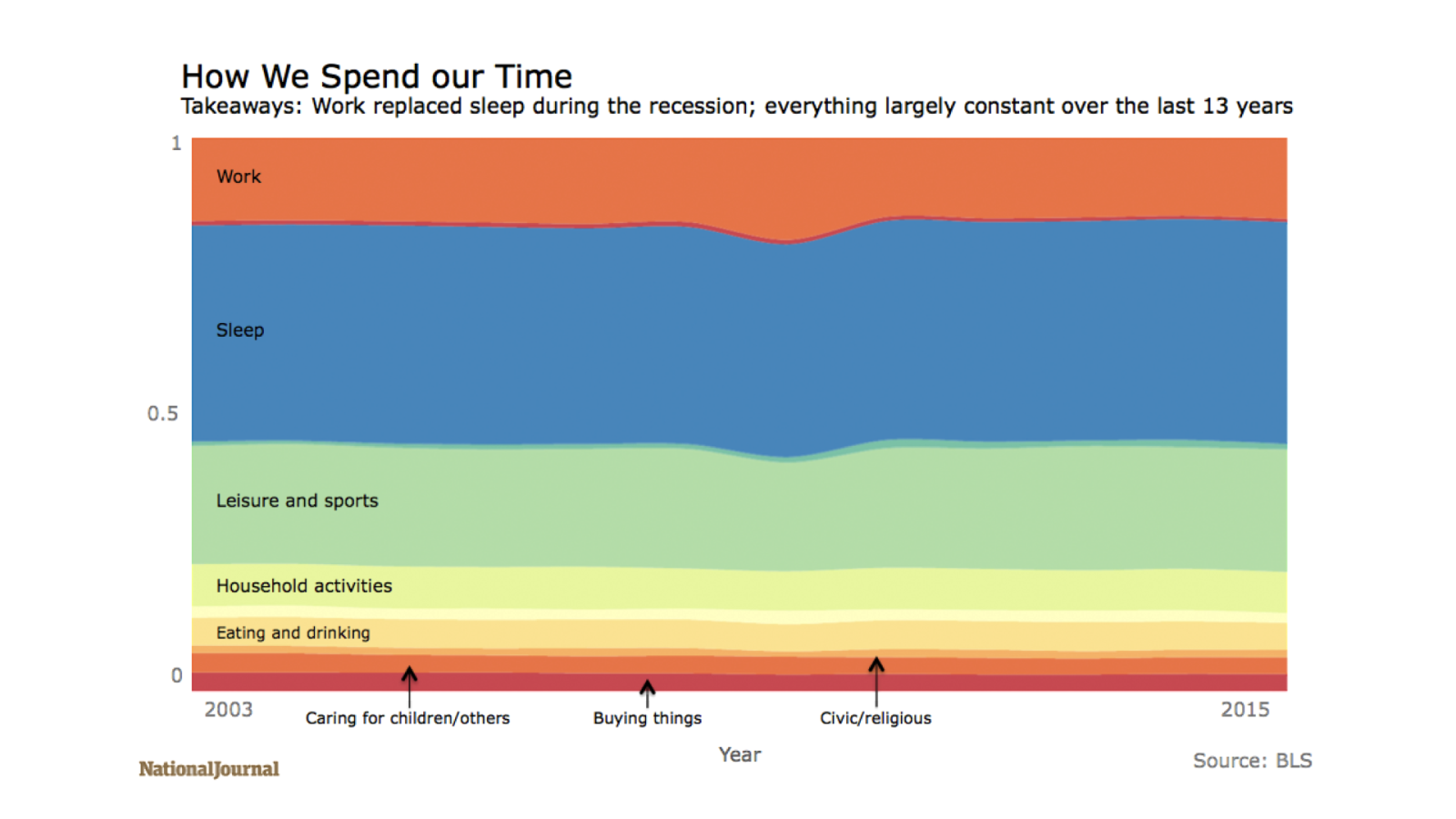
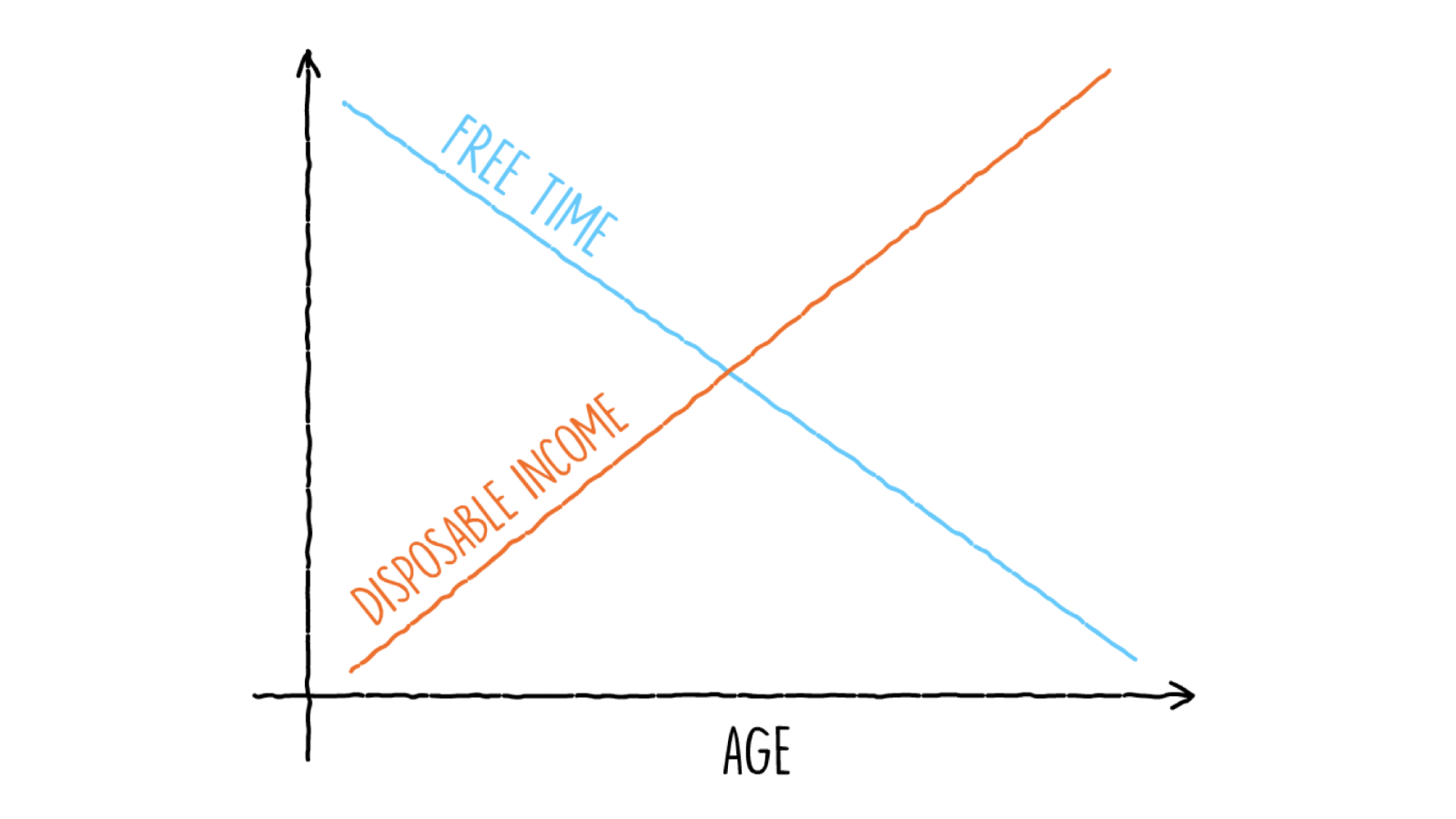
Players simply don’t have enough free time to play all these games.
Our free time simply hasn’t increased much over the last decades. It hasn't kept up with a multiplication of cultural offerings.
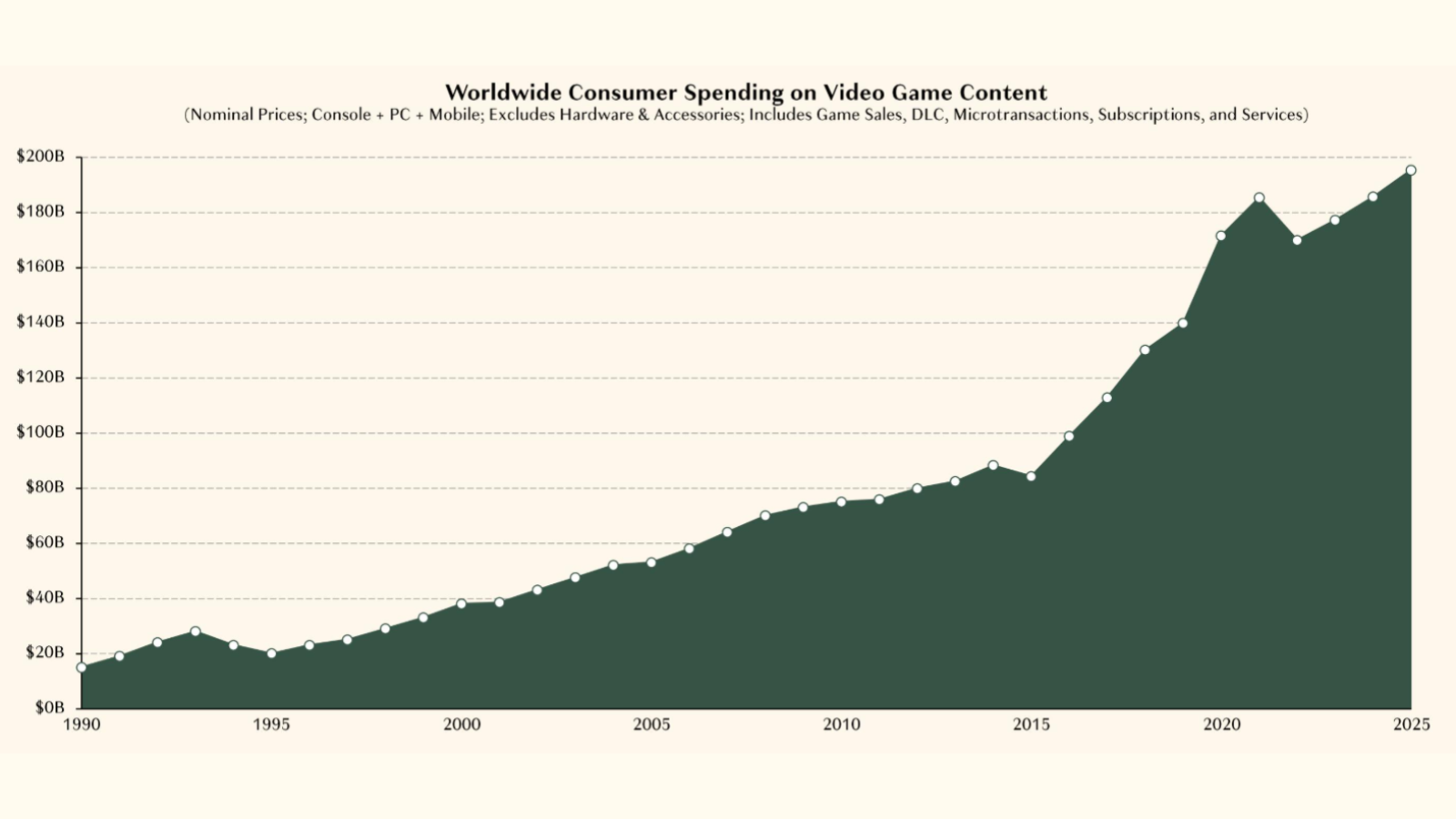
And the COVID pandemic confirmed that hunch.
In 2020 and 2021 there was a significant increase in spending across all online entertainment.
People in lockdown simply had more time to play games or watch TV.
When social distancing measures phased out you see a rebounding of spending.
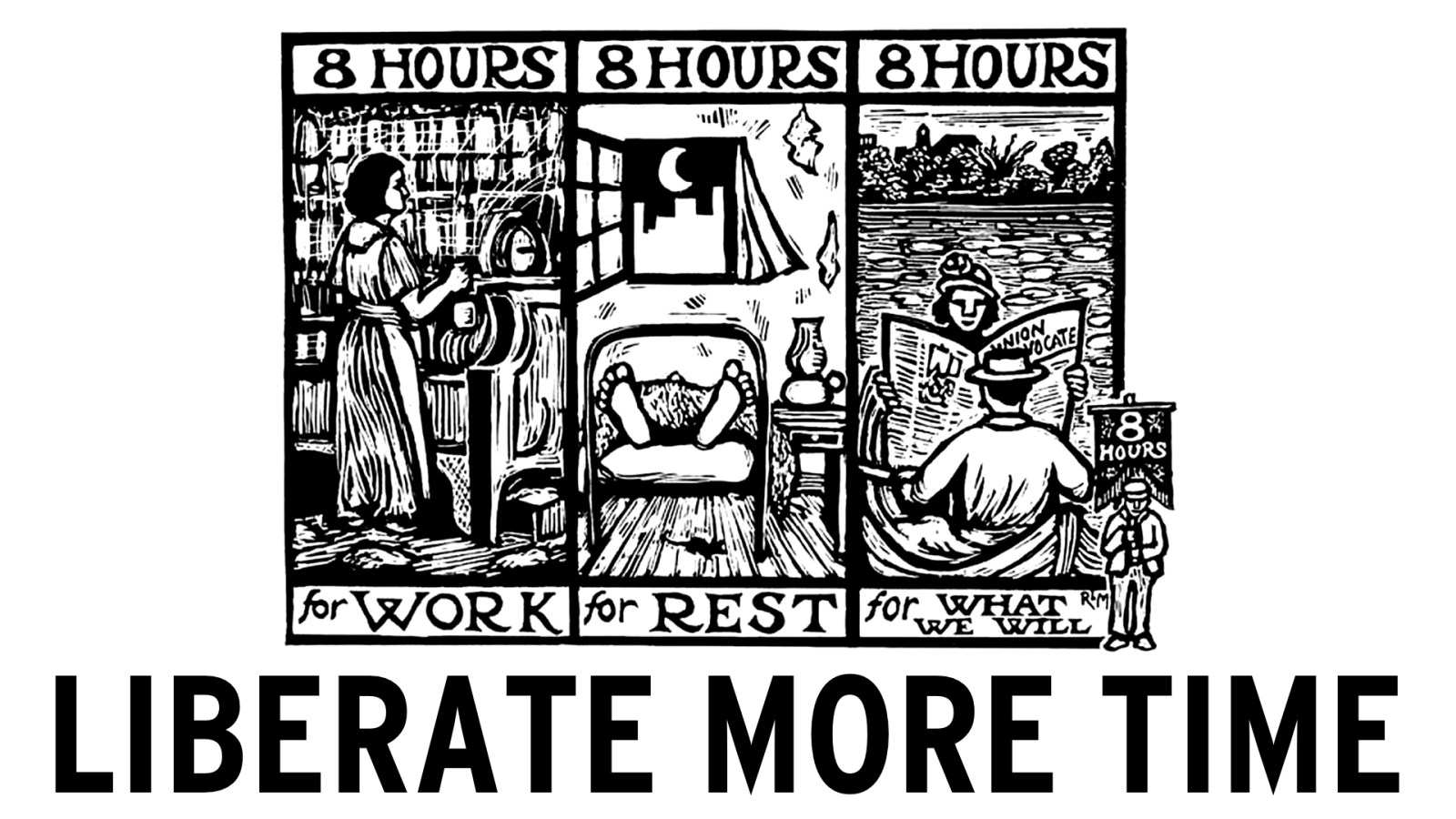
I provocatively proposed some ways to address a scarcity of attention without curtailing cultural production.
One is to liberate more time.
Why are we still working eight hours or more like in the 19th century despite an increased productivity?
Two: Find new markets and new audiences. Old people, non-gamers, and such.
Three: make shorter games.
This solution is challenging because A core audience of younger cashless gamers always demand longer games for less.
The term “indiepocalypse” appeared in 2015.
It evokes an apocalypse, a mass extinction of some sort.
Of course, no such thing has happened. Indie games are more plentiful than ever.
And they increasingly compete with AAA games for attention and market share.

This takes me to the crisis and mass extinction currently happening in the US and Europe.
I’m gonna call the AAApocalypse but I want to brainstorm a better name later.
It seems like we are at a major turning point. Here’s a quick summary.
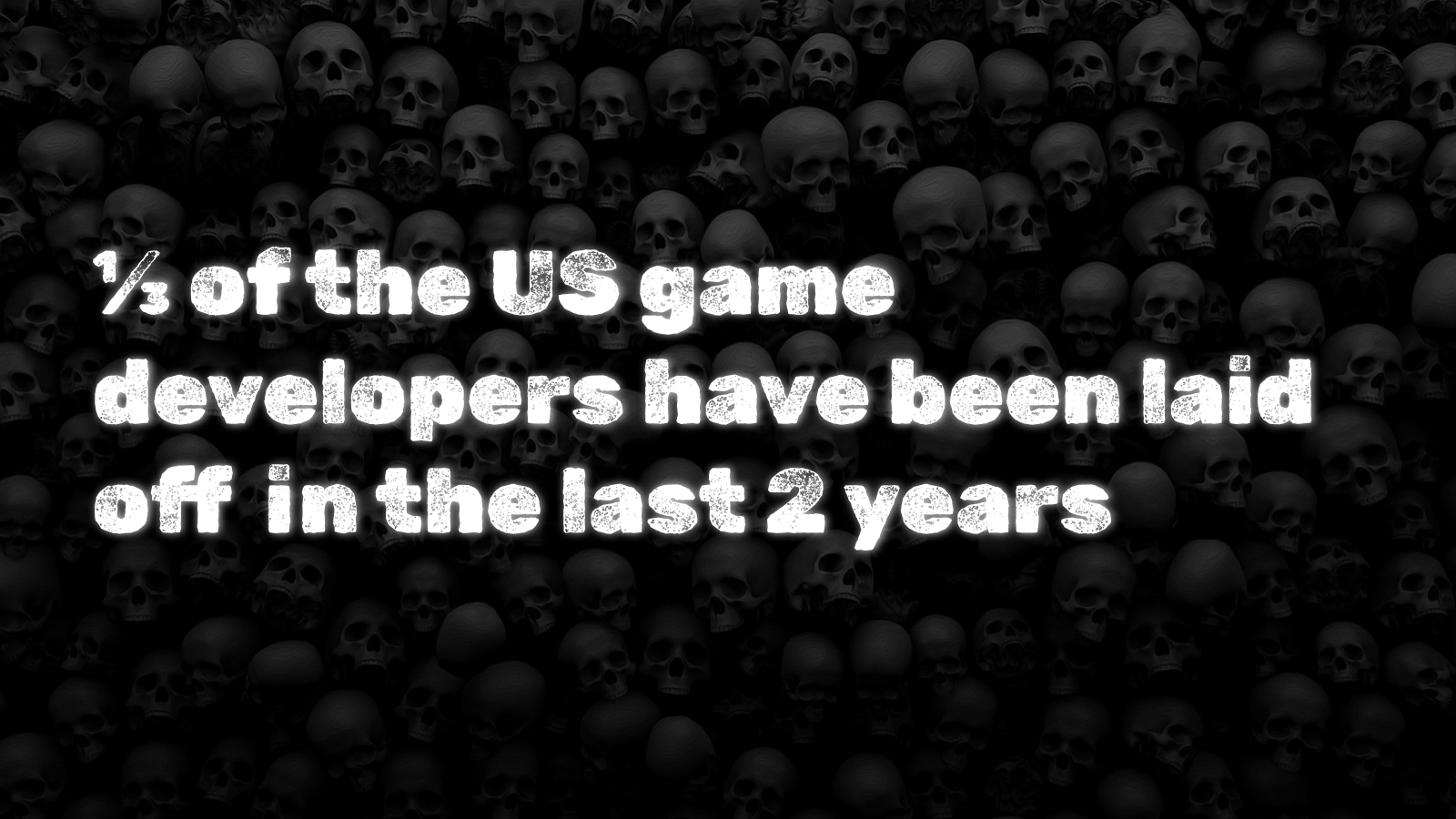
About 1/3 of the US game industry has been laid off in recent years. Europe is not doing much better.
At least 30 video game studios closed since 2022.
Major projects are getting canceled every day.
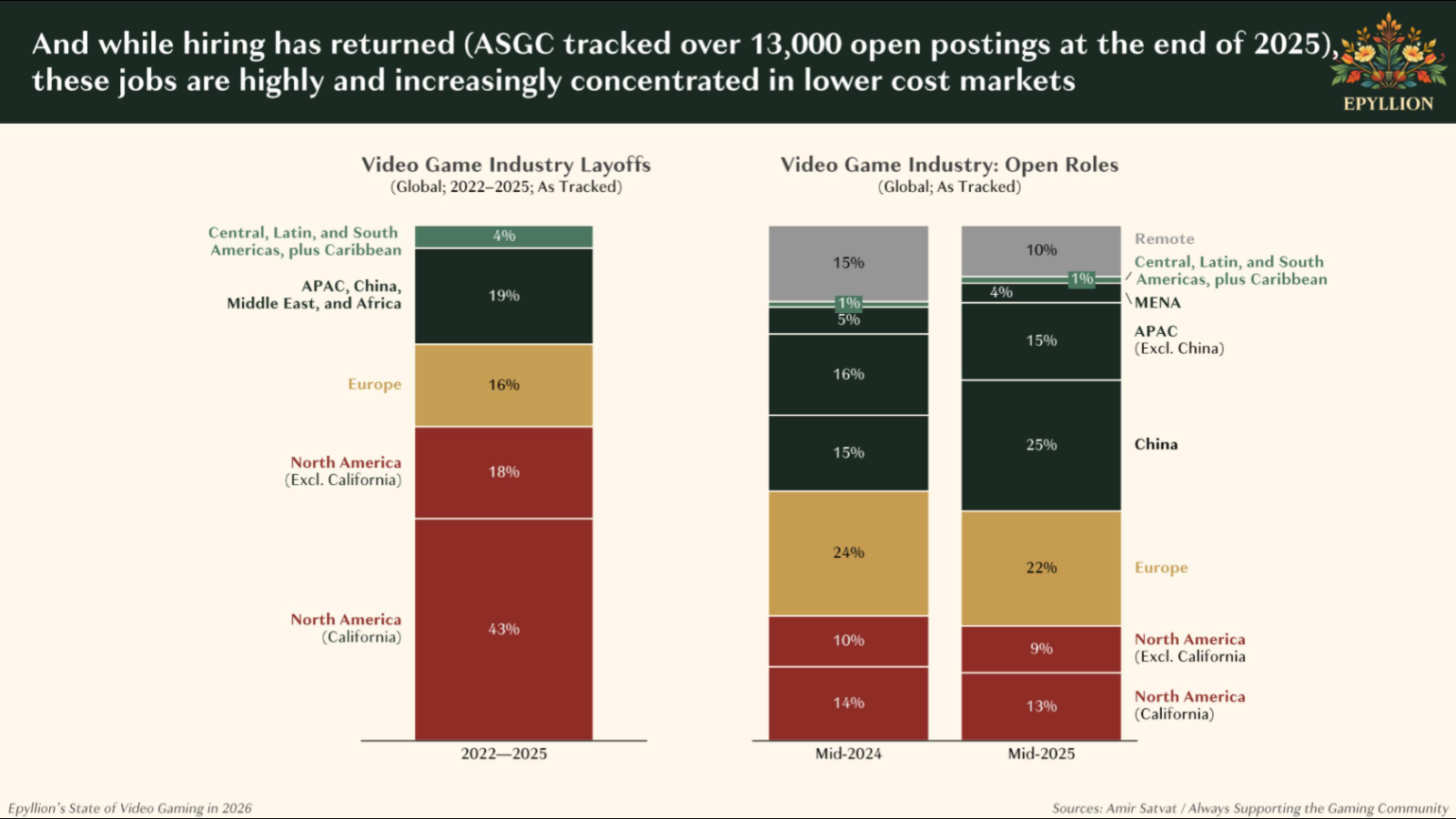
Many of these laid-off developers are not being rehired. At least not under the same conditions.
Hiring is disproportionately concentrated in regions with lower costs of labor (primarily China and Southeast Asia).
The graph is from Matthew Ball's The State of Video Gaming in 2026.
These are growing markets for games, but they are growing at a slower rate than the hires.
In other words, western game studios are outsourcing labor.

At the same time, game companies are trying to automate and deskill labor using generative AI

I live in Pittsburgh, a city that used to be a major steel and manufacturing hub.
We are constantly reminded of the industrial collapse of the 80s (this is us taking a stroll in the ruins of a blast furnace).
Well paid union jobs left the United States and never came back.
This created working class resentment, xenophobia, the decline of entire cities, drug epidemics and so on.

If you are a Marxist-workerist like me, you may be inclined to read the outsourcing and automation that happened in the major industrial economies in the late 20th century not as a techno-deterministic evolution of productive capabilities, but as a capitalist restructuring.

A restructuring meant to discipline a workforce that became increasingly dissatisfied, unruly, and organized in the 60s and 70s.
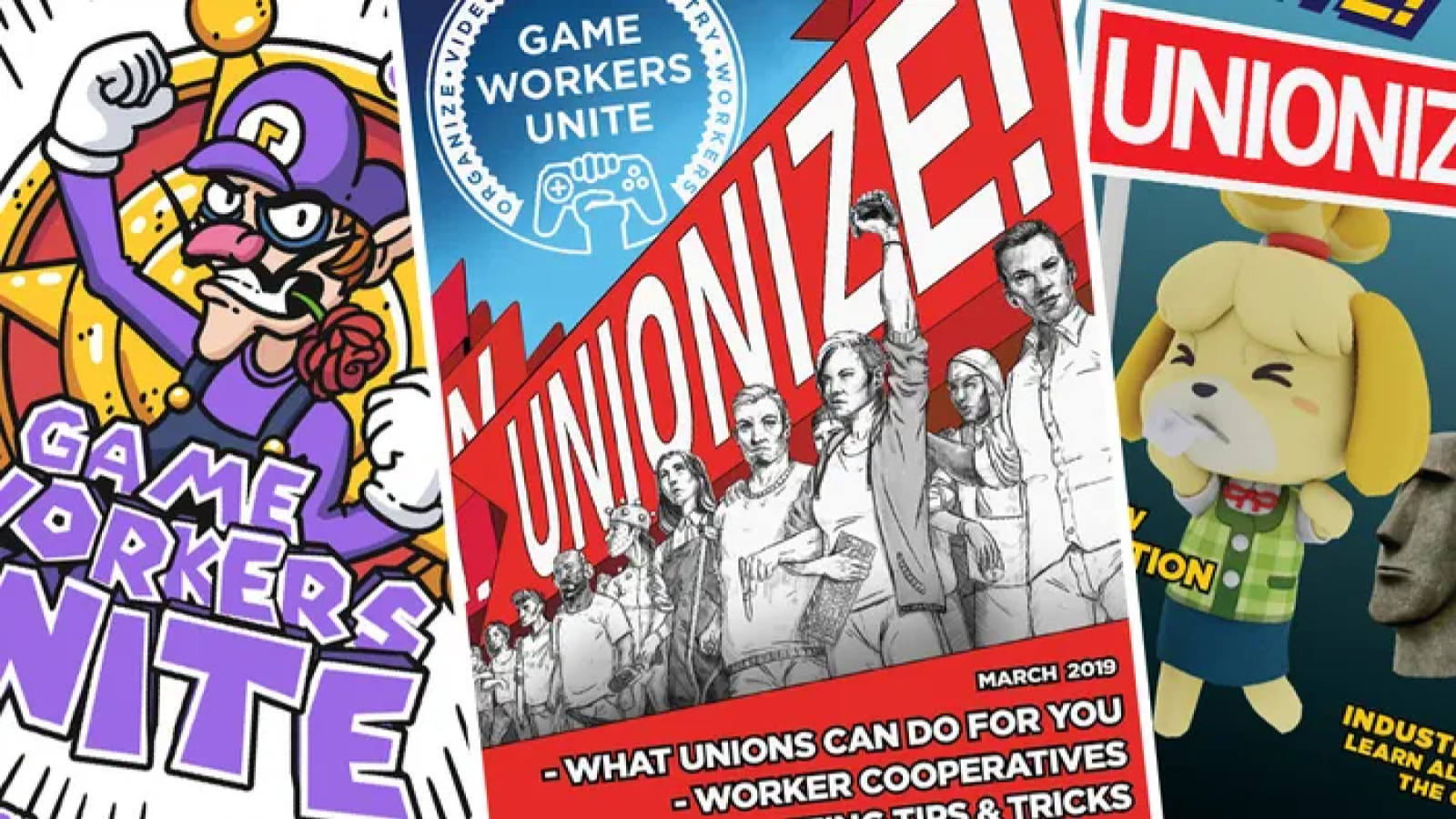
Now, I don’t believe the rise of game unions today is widespread enough to cause a wave of outsourcing and automation.
But I’m sure it’s a factor in these management decisions.
Generative AI is marketed in the creative industries as a labor cutting technology. They are not promising new experiences thanks to AI, they are promising cheaper and more quickly produced games.
It suggests that the suits would rather operate barely functioning slop machines than manage creative talent with human autonomy and human desires.
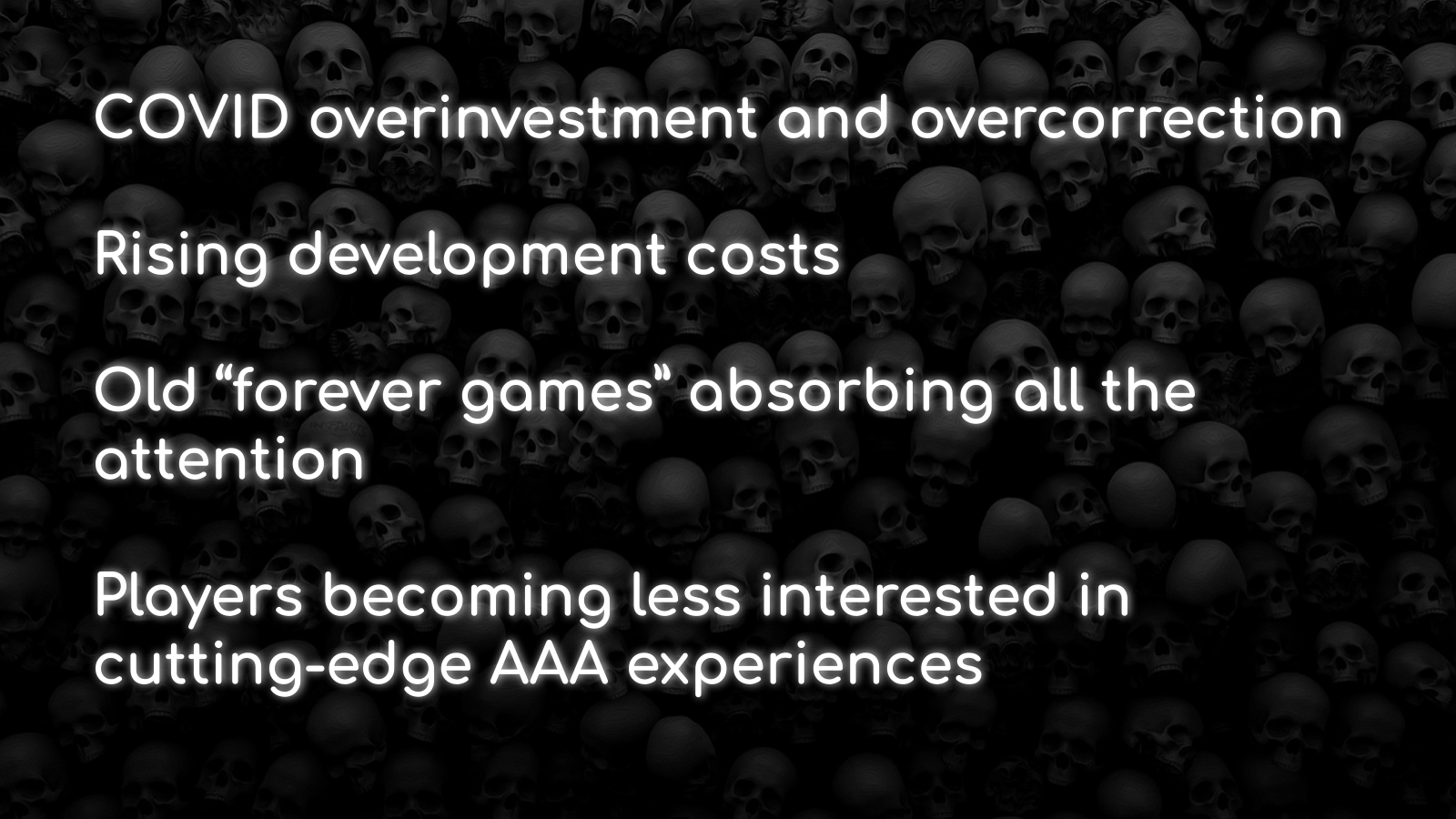
Some of the causes of the AAApocalypse being debated as we speak, sorry again for the lack of footnotes:
Overinvestment and overcorrection.
Investors thought that people would keep playing games as much as during the lockdowns. They didn’t. Given the choice, non-gamers prefer to have a social life.
A wave of aquisitions and mergers by groups like Embracer that didn't immediately pay off (as it often happens for culture), causing financial woes, debt and cost-cutting measures.
It's a failed publisher consolidation.
Investors possibly pivoted to the AI bubble.
Development costs steadily increased to justify new gaming technologies, game prices did not increase at the same rate.
A few “Forever games” and platforms like Fortnite and Roblox are still capturing most of the players' attention.
AAA companies and publishers cannot reliably produce hits anymore. Ambitious high profile releases regularly underperform.
Many game developers see record profits in the game industry along mass layoffs and they understandably blame the executives' greed.
I'm sure there is a pursuit of short term interests at the expense of a sustainable industry, but I suspect the suits are also seeing some big seismic shifts coming up, and trying to cut their losses.
It’s likely that the most profitable market, the premium AAA gamer market is shrinking.
Gaming hardware is becoming more expensive for the time being, thanks to the AI bubble.
The traditional gaming audience may be increasingly attracted to other forms of game-adjacent entertainment like sports betting, gambling, and predictive markets.
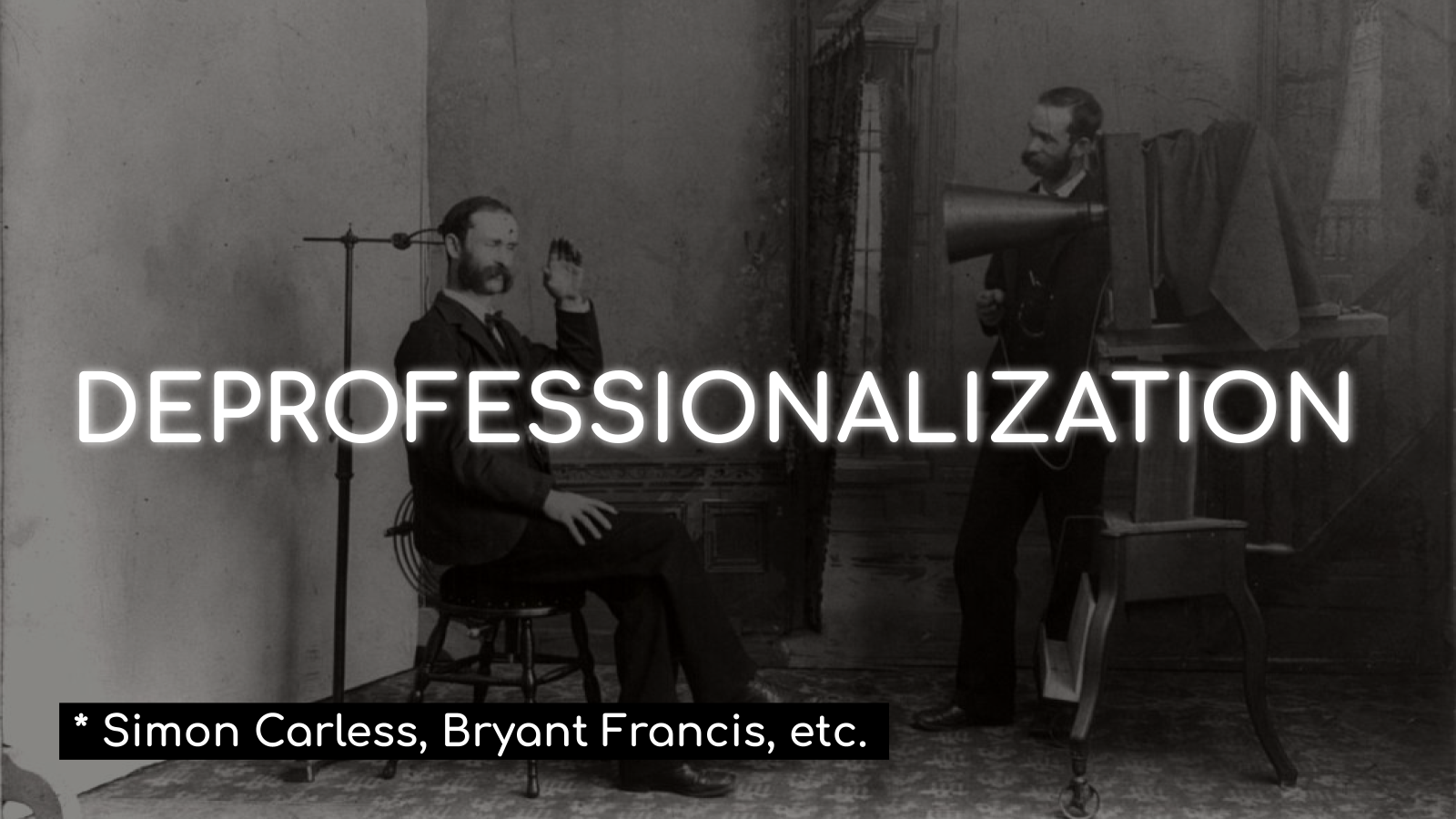
Industry commentators have been talking about a deprofessionalization of the Western game industry.
I think it's useful because it can be applied to the thousands of professionals who are out of a job. Forcefully deprofessionalized.
But also to the thousands of independent developers making games non-professionally.
*With this background picture I was thinking about how photography used to be only for professionals due to specialized skills and equipment.

Science Fiction author and futurologist Bruce Sterling has this maxim: “Whatever happens to musicians happens to everybody”
He sees musicians as the patient zero for the precarization of all cultural industries. Musicians were always the first to be ripped off by suits, labels, venues, piracy and streaming platforms.
It’s easier imagine a near future in which almost every game developer operates like an independent musician today.
Like musicians and artist they'd be drawn are drawn to artmaking as an inherently meaningful, inherently gratifying activity, not quite a career. They may professionalize only if the stars align and they have a hit.
There is a longstanding faction of indie game makers that rejects commercialization.
The Rise of the Video Game Zinesters by Anna Anthropy, which I referenced earlier, argues for game making as an inherently meaningful activity. Making games as zines, resourcefully and for your community.
The difference between these earlier propositions and today’s reality is that making games just for pleasure might not be a punk rock choice anymore. It’s just the inevitable reality for all developers.
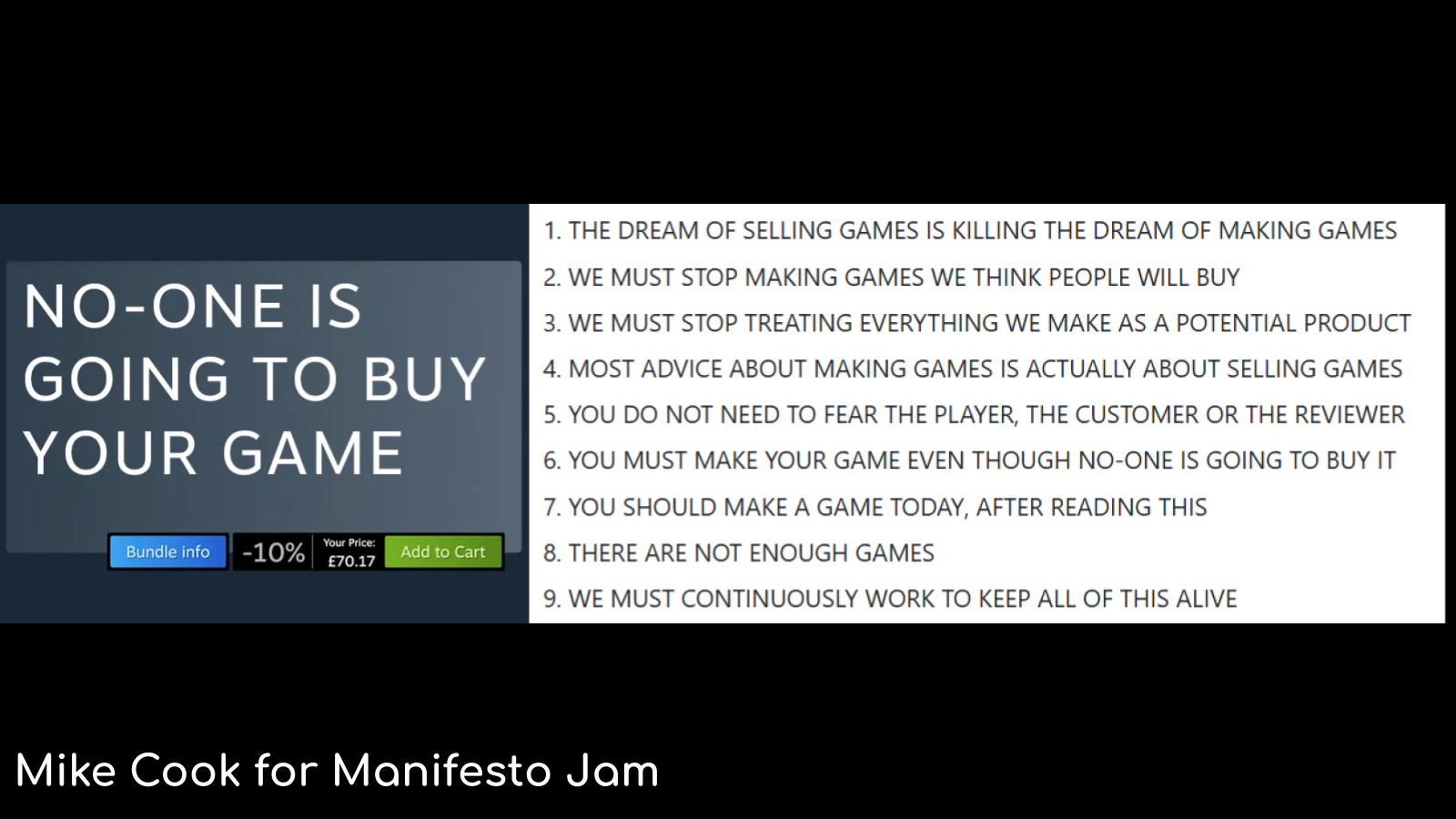
As as Mike Cook's manifesto says: No one is going to buy your game, so you might as well make whatever makes you happy.
Deprofessionalization is different from decommodification.
Games are still a valuable commodity.
For every unit sold and game made, platforms like Steam and Apple make money. They profit even when the individual games are not profitable.
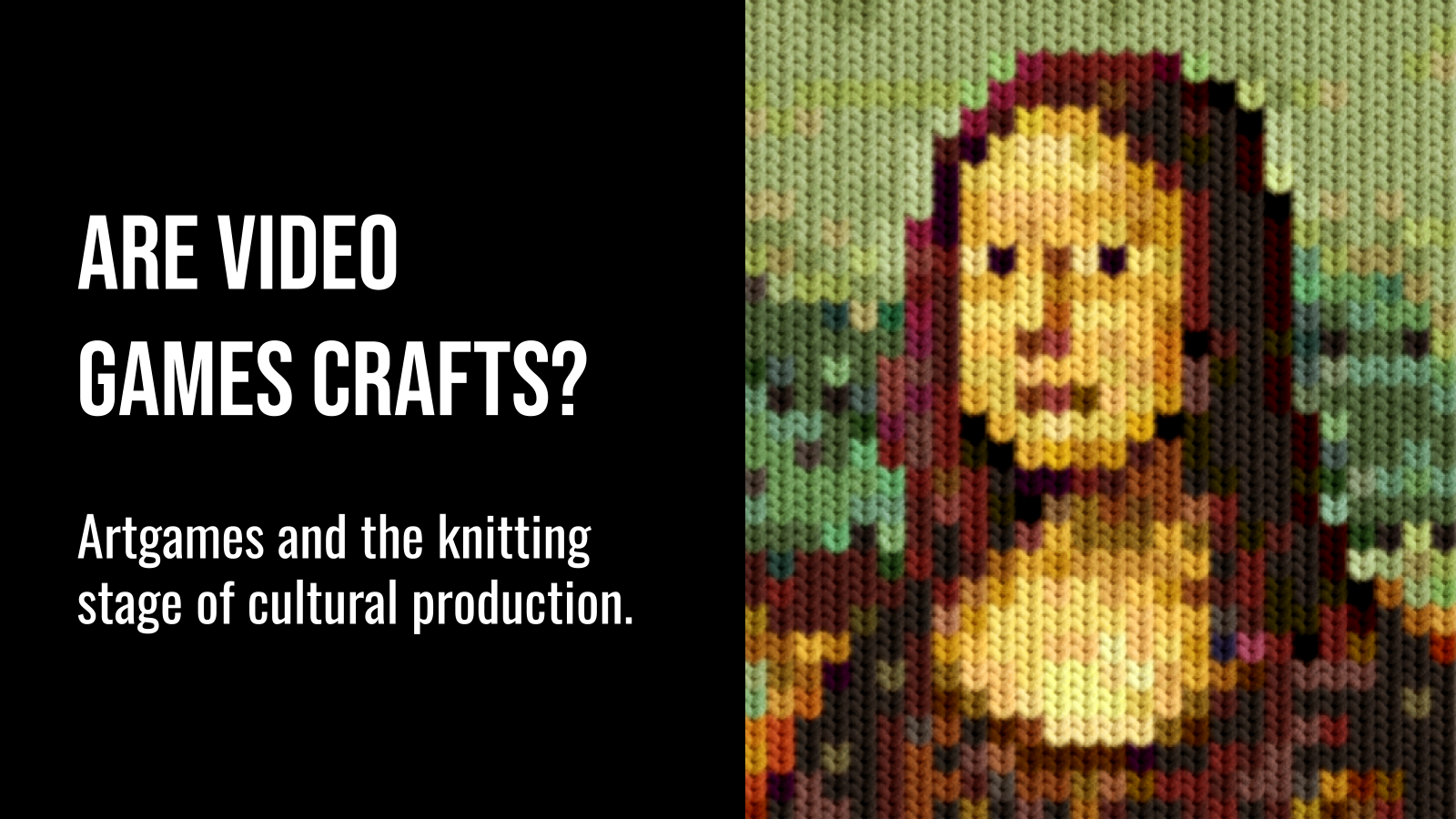
I’ve been jokingly calling this trend The knitting stage of cultural production

Consider knitting: there aren’t many professional knitters - at least in the Global North.
You can’t really make a living out of it because knitting is time consuming. You can’t compete with industrially-made knitwear, made with machines and cheap labor in lower income countries.

There is no money to be made by knitting BUT there IS money in knitting.
Companies who sell yarn and knitting tools make money. People who provide courses and spaces for knitting make money, craft fairs make money. The social media that show knit wear, some knitting influencers presumably make money.
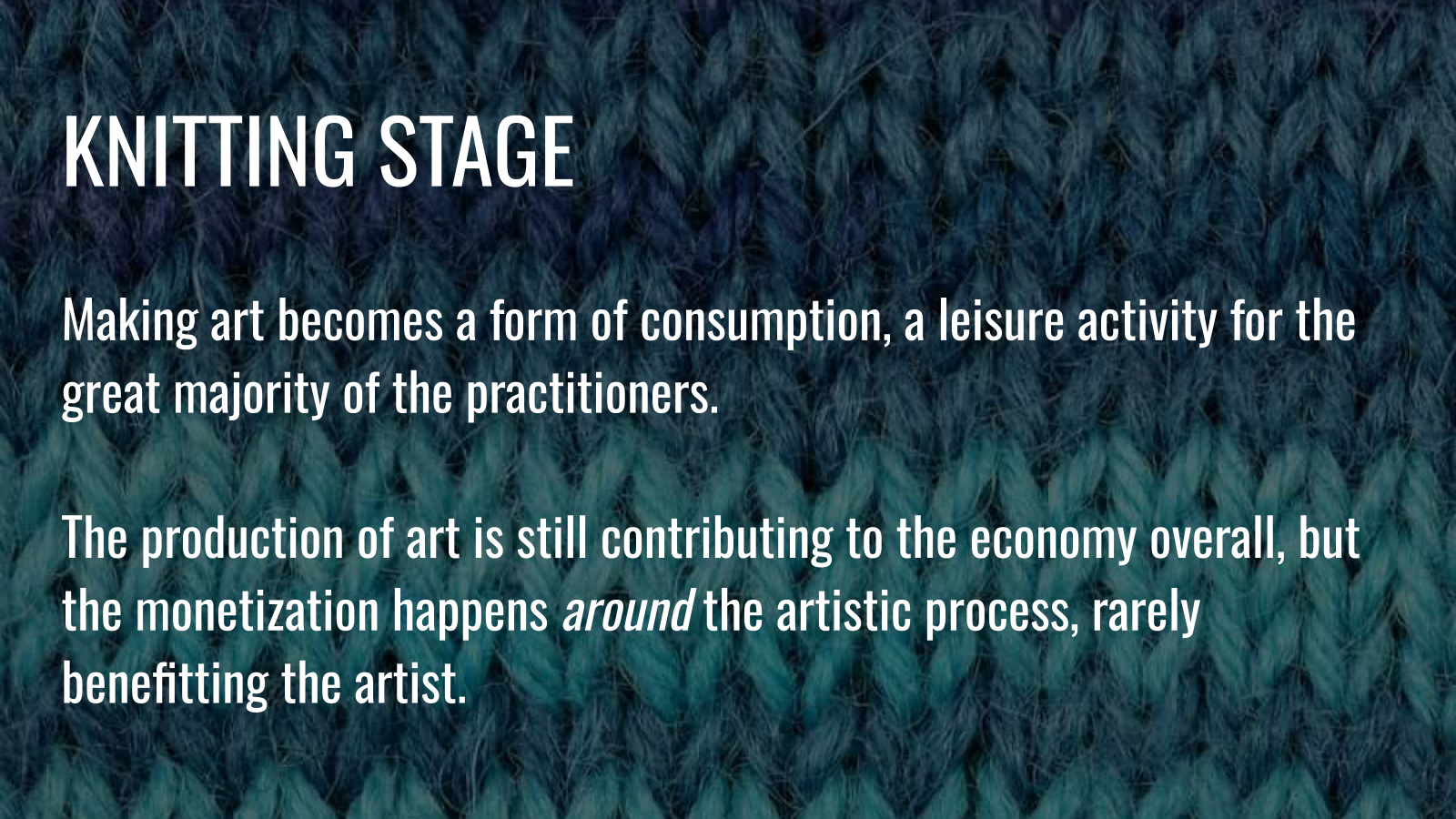
My hypothesis is: from a materialist point of view, the cultural forms that are not capital-intensive are moving towards the knitting stage.
Making art becomes a form of consumption, a leisure activity for the great majority of the practitioners.
The production of art is still contributing to the economy overall, but the monetization happens around the artistic process, rarely benefiting the artist.

The beneficiaries are those in the position of extracting value from many artists at the same time:
publishers, marketers, curators, educators, tool makers, art speculators, content aggregators, marketplace owners, providers of art services and so on.
And to be clear: I don’t want to imply just a parasitic relationship. Those are, for the most part, necessary jobs. They are closer to ordinary 9 to 5 jobs, and they are not as prestigious and rewarding as the creative jobs they support.

Digital platforms are the ones selling yarn to the game knitters.
They encourage a proliferation of creators, Because they profit also when individual creators lose money.
Platform capitalists only have to make sure that there are a few winners, to signal the possibility of success.
There is also a lively cottage industry of services targeted to hopeful indies in search of visibility: marketing services, content creator middlemen, events and showcases.

If the hobbyification of culture as I described it, is indeed real.
It raises some tough questions. Especially if you are in my position: if you are teaching in an art school, in a game program, in music, or the humanities. Especially in a country where education is not free. (That’s my fancy art school at Carnegie Mellon University)
How can we justify an increasing cost of education if there is no hope for professionalization?
*Brendan Keogh asks a similar question from his position within a game program in Australia.

Are we okay with art schools being among the yarn sellers?
Are we okay with monetizing the dream of having a meaningful career under capitalism?
Are we okay with art education becoming increasingly a leisure activity for the rich? (By rich I mean the ones who can afford making art without caring about income)
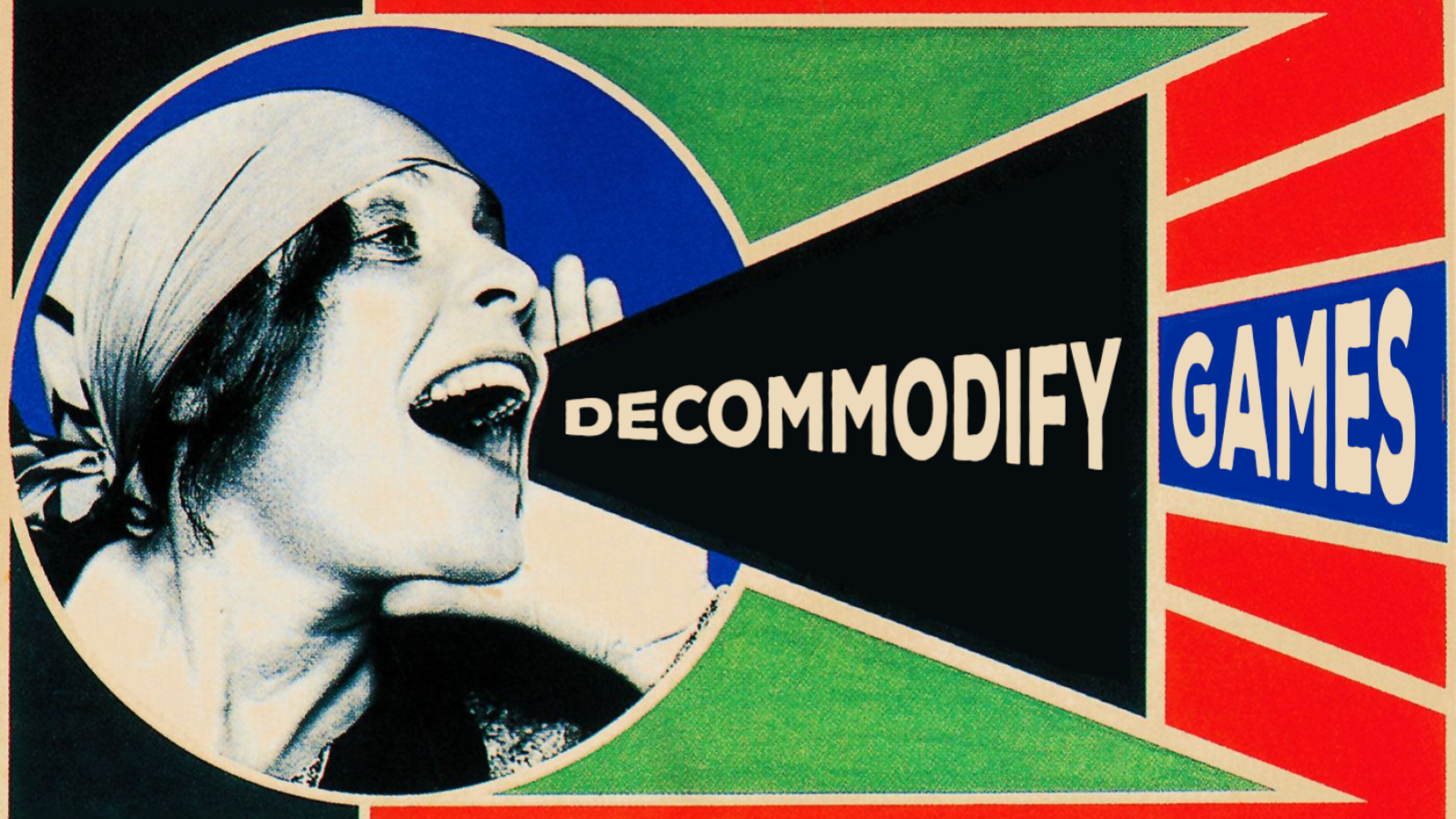
In order to decommodify games in a way that is not exploitative - without providing free labor, free content for the platform capitalists - we have to socialize the yarn, so to speak.
The engines, the means of distribution, the social media, wherever value is extracted from free labor.

image: "Game Over" by Kordian Lewandowski 2009
And/or recognize games as culture
And support their creation regardless of profitability.
That's also the ultimate solution to the attention economy crisis.
This is all I have to say.
AAApocalypse is more of an inside-joke and doesn’t quite describe this restructuring.
The Microsoft leadership has been talking about a Reset, which is euphemistic considering the thousands of lives overturned by their reckless investments.
But I think the "Game Industry Reset of the 2020s" has a certain gravity to it.
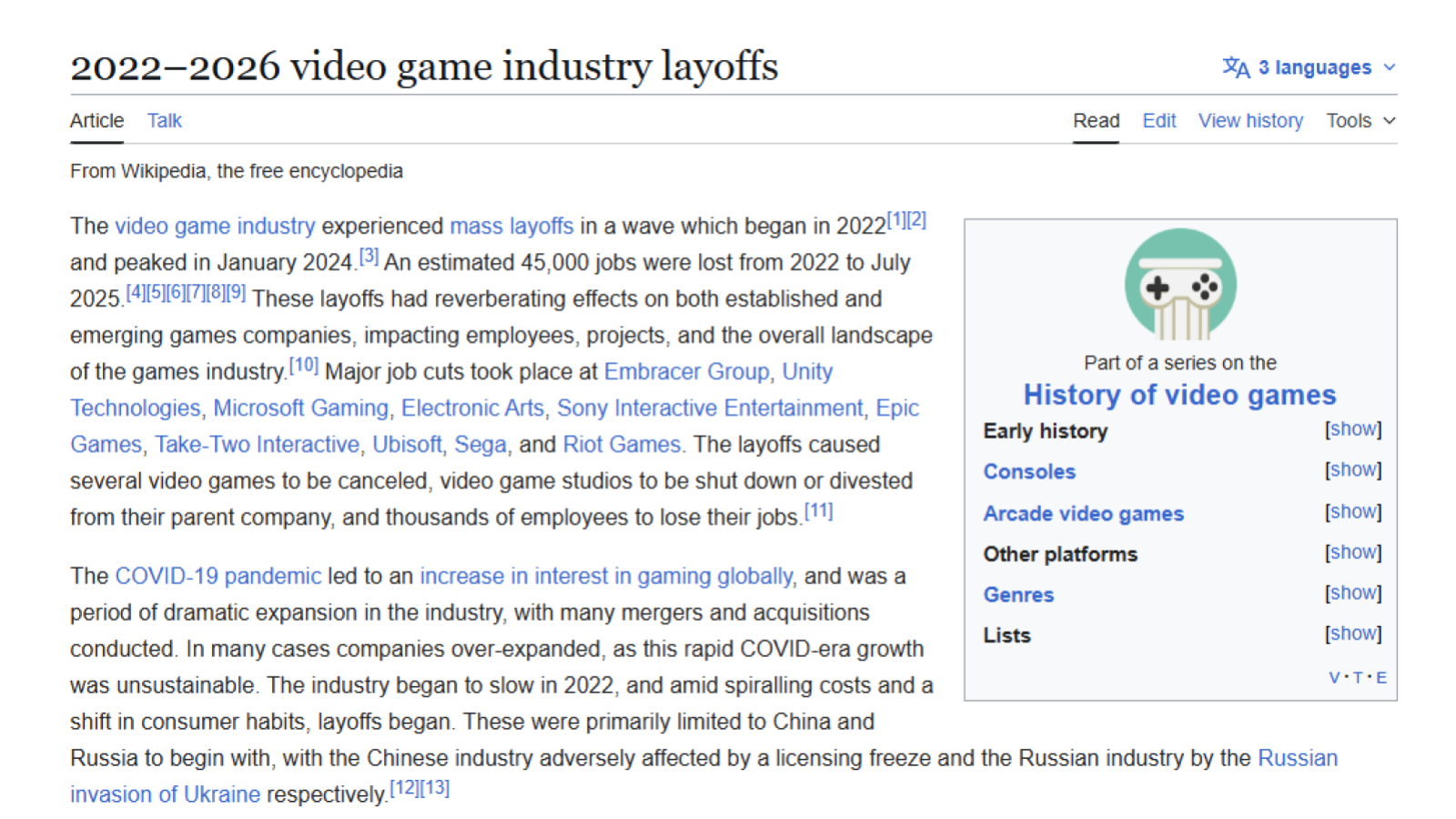
Wikipedia has a good article titled the "2022-2026 Video Game Industry Layoffs".
It used to be called 2022-2025. They had to update it because the layoffs kept happening.
Before that it was called, you guessed it, 2022-2024 game layoffs.
I think there is more than layoffs happening.
Since we are talking about periodization and there are so many game historians are here in this room today, I thought we can brainstorm a better term for this for the era that is ending or the current conjuncture.